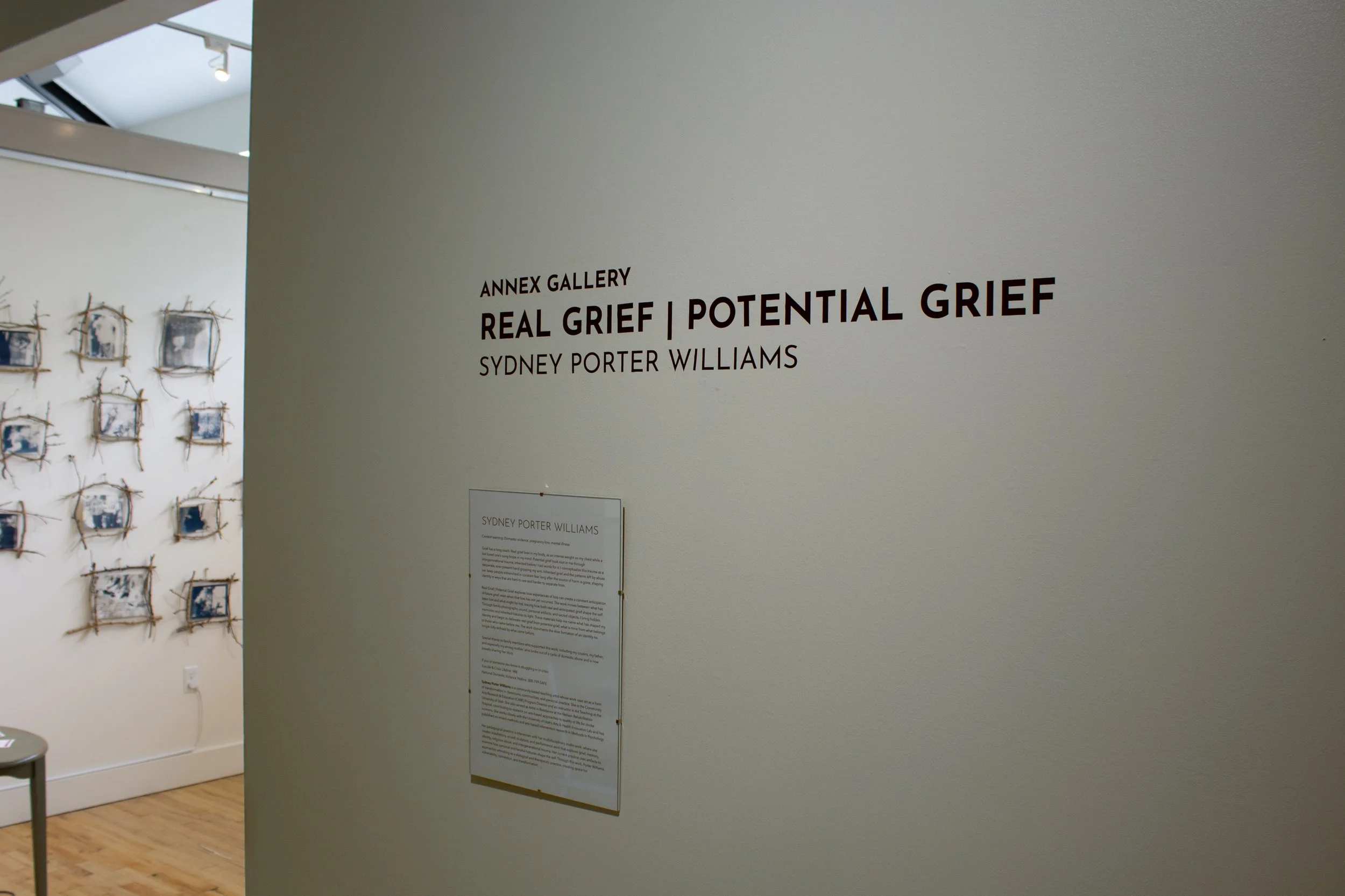
Content warning: Domestic violence, pregnancy loss, mental illness
Grief has a long reach. Real grief lives in my body, as an intense weight on my chest while a lost loved one’s song loops in my mind. Potential grief took root in me through intergenerational trauma, inherited before I had words for it. I conceptualize this trauma as a desperate, ever-present hand gripping my arm. Inherited grief and the patterns left by abuse can keep people entrenched in constant fear long after the source of harm is gone, shaping identity in ways that are hard to see and harder to separate from.
Real Grief | Potential Grief explores how experiences of loss can create a constant anticipation of future grief, even when that loss has not yet occurred. The work moves between what has been lost and what might be lost, tracing how both real and anticipated grief shape the self. Through family photographs, sound, personal artifacts, and sacred objects, I bring hidden memories and inherited histories to light. These materials help me name what has shaped my identity and begin to delineate real grief from potential grief, what is mine from what belongs to those who came before me. The work documents the slow formation of an identity no longer fully defined by what came before.
Special thanks to family members who supported this work, including my cousins, my father, and especially my strong mother, who broke out of a cycle of domestic abuse and is now bravely sharing her story.
If you or someone you know is struggling or in crisis:
Suicide & Crisis Lifeline: 988
National Domestic Violence Hotline: 800-799-SAFE
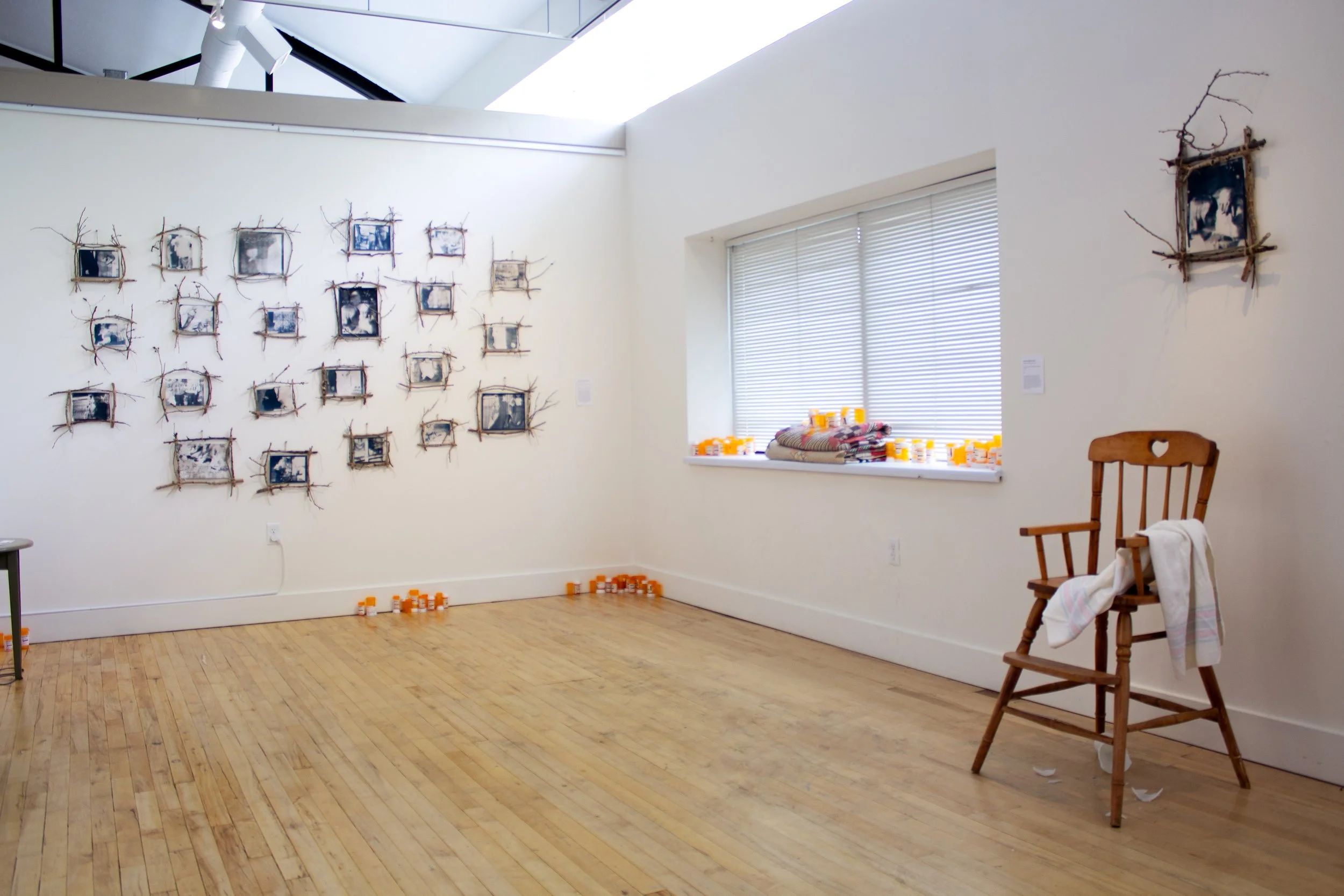
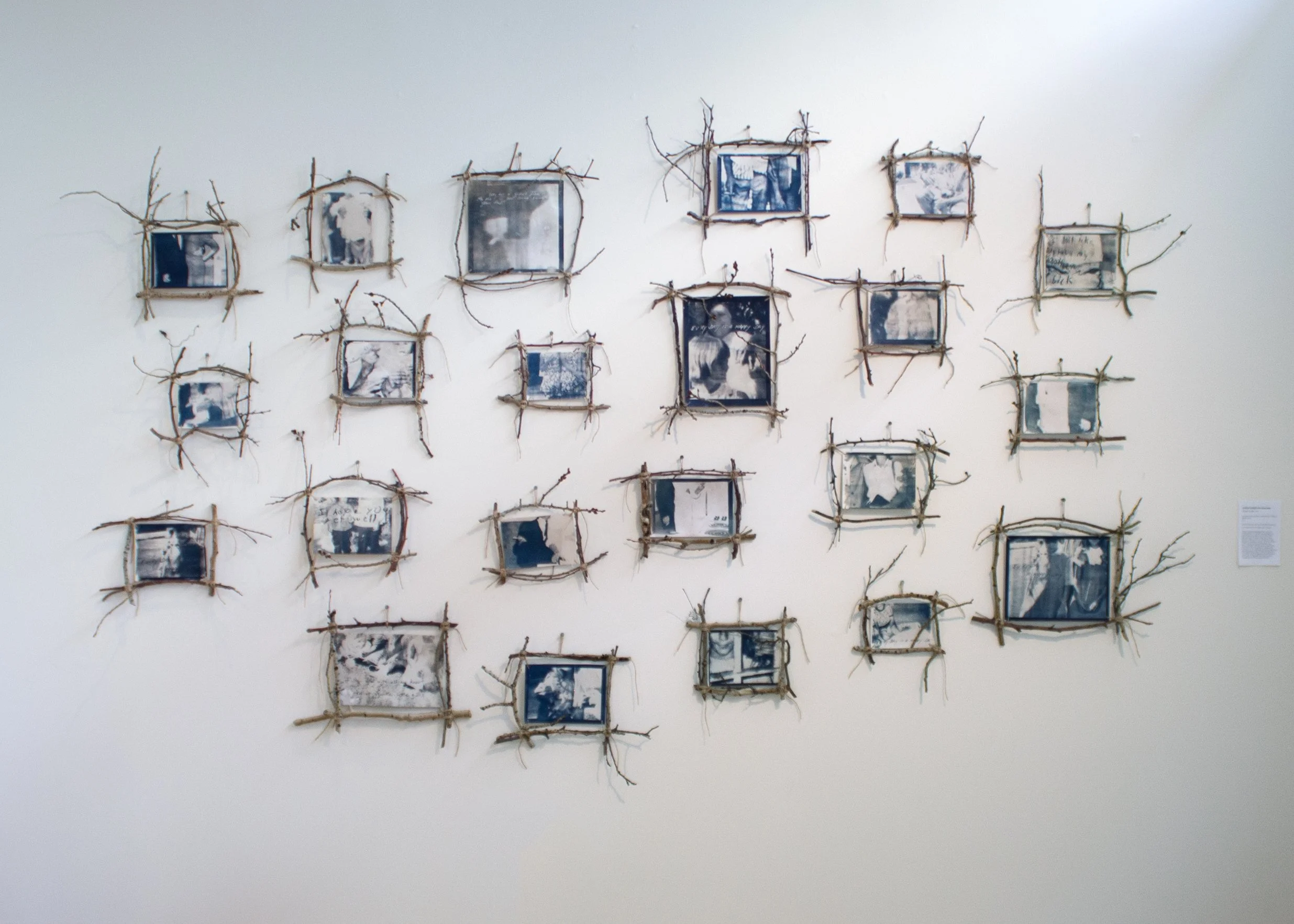
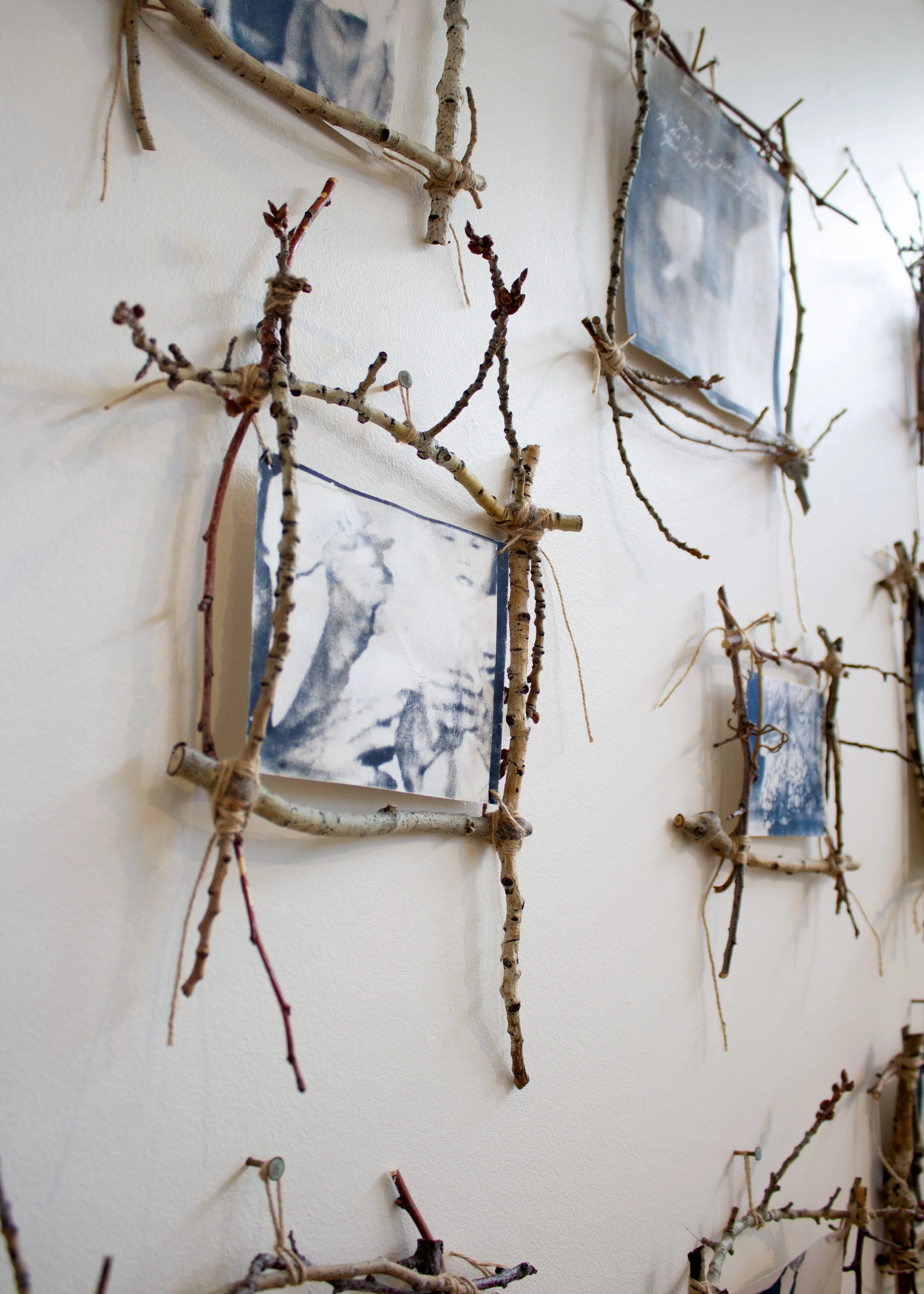
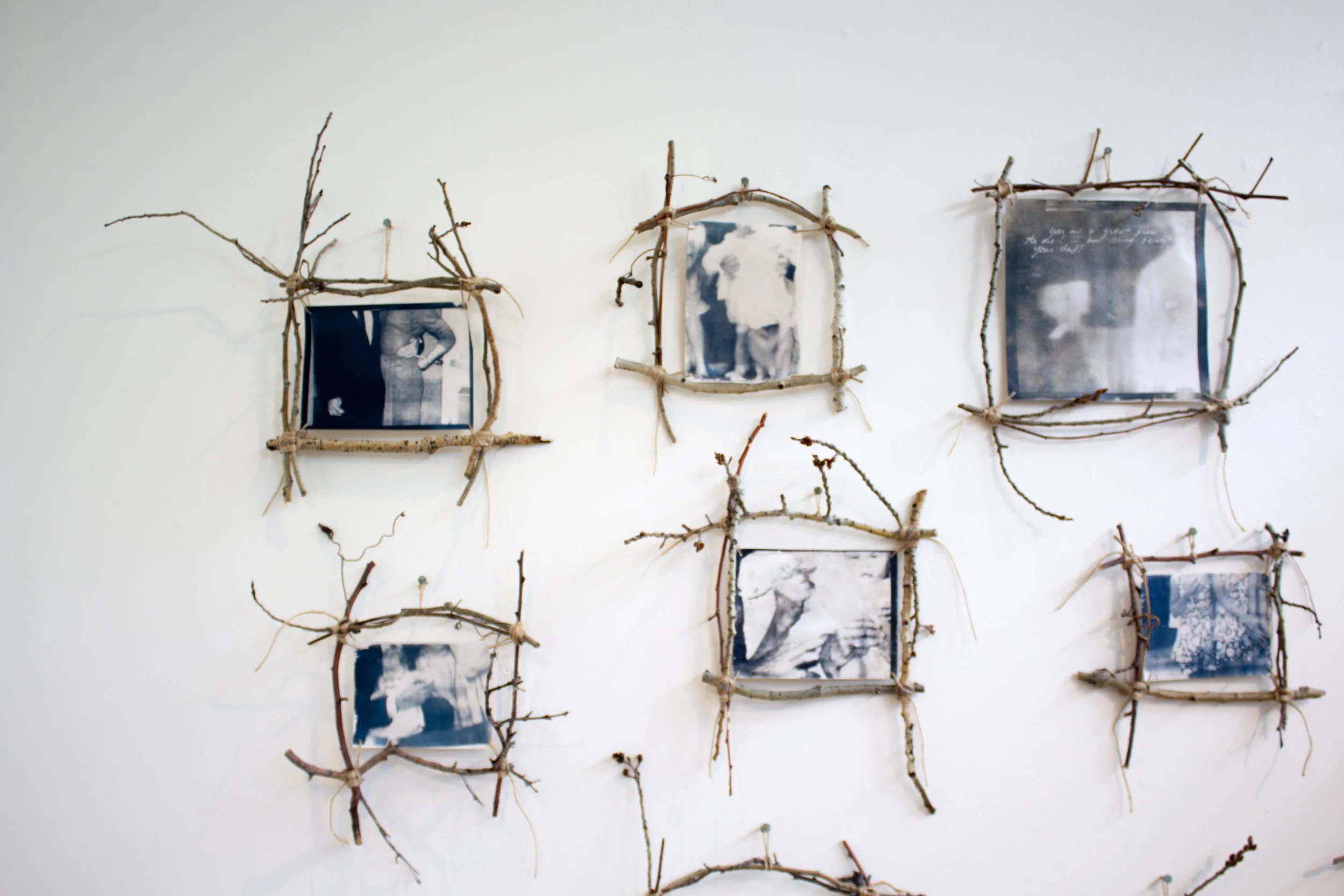
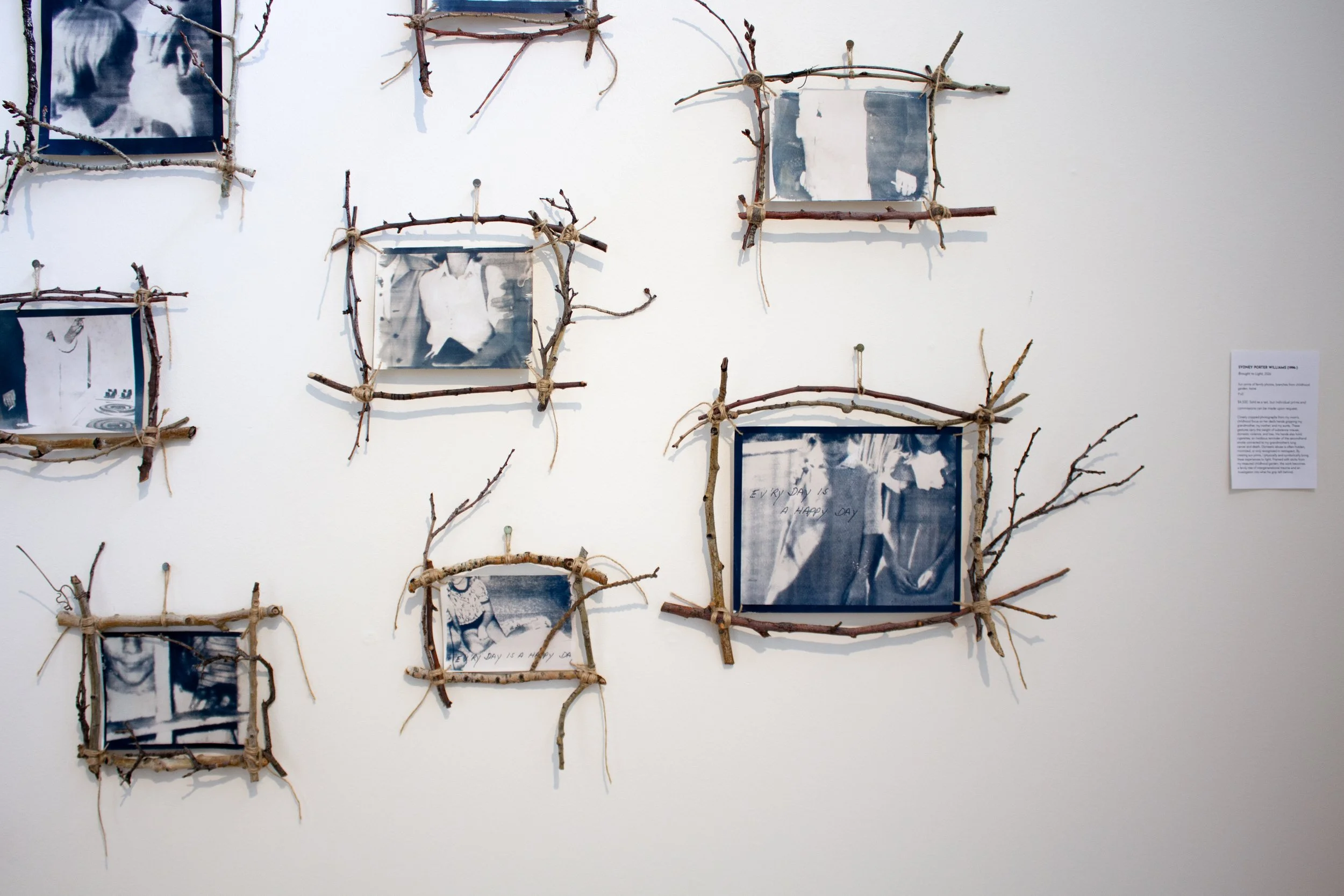
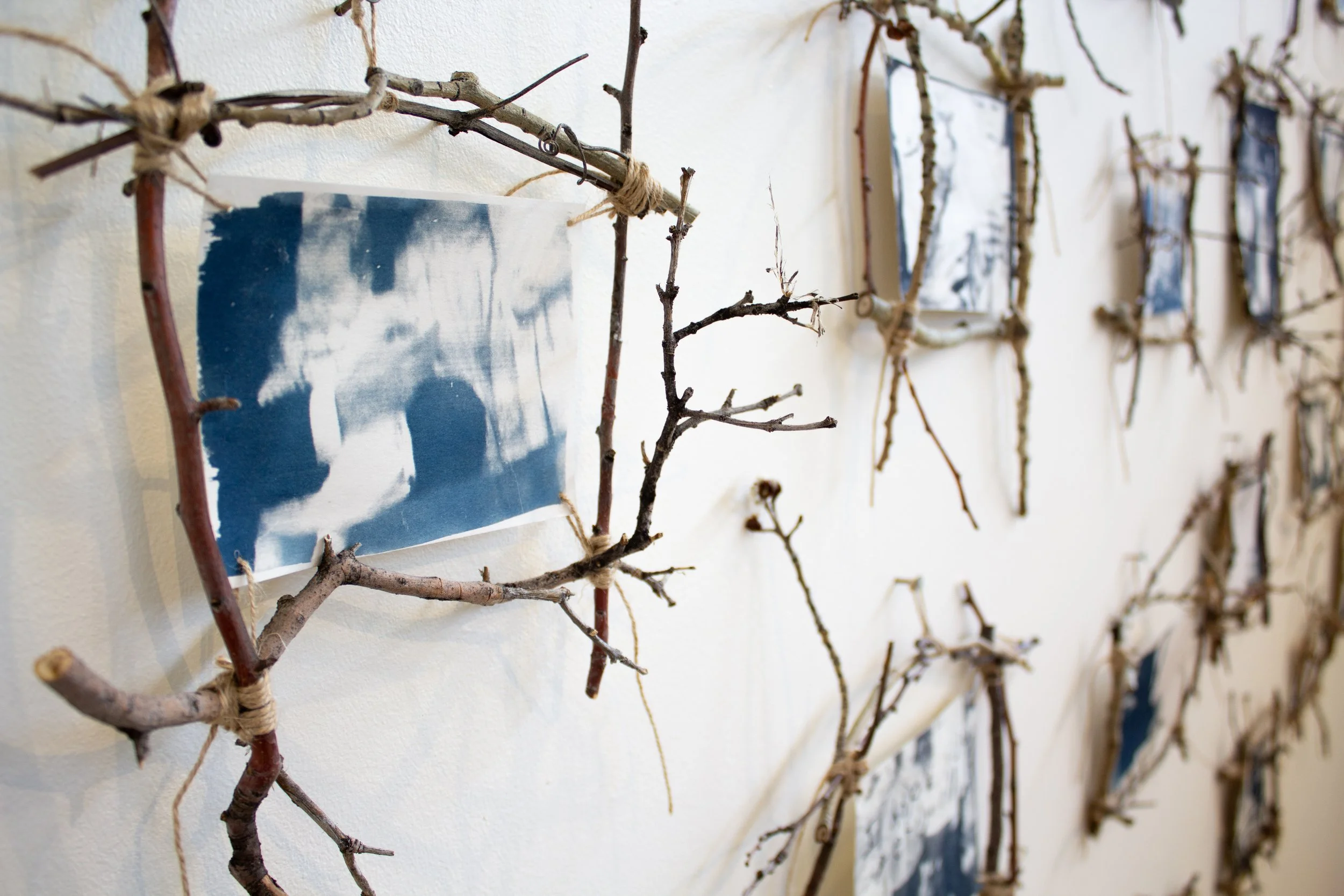
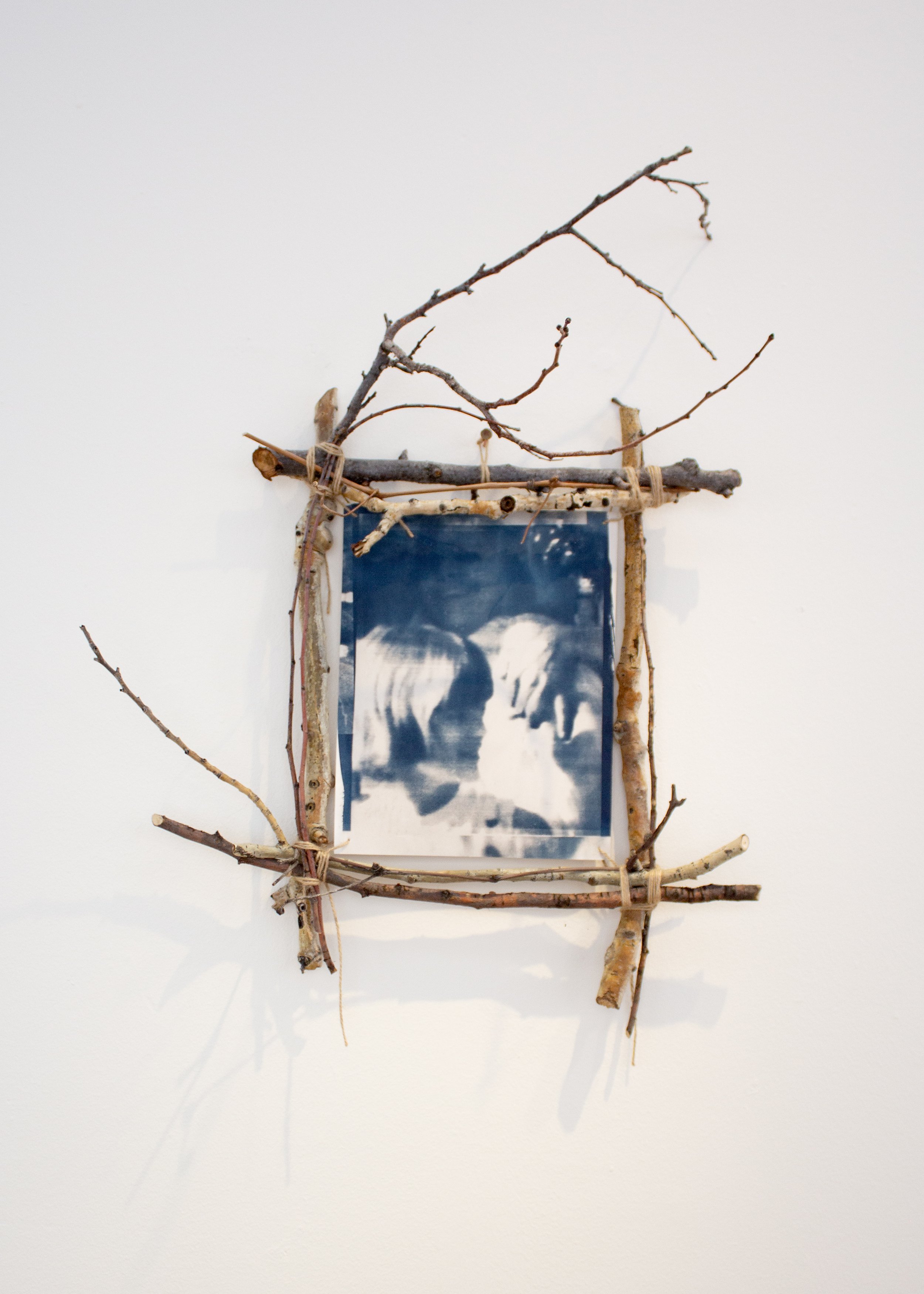
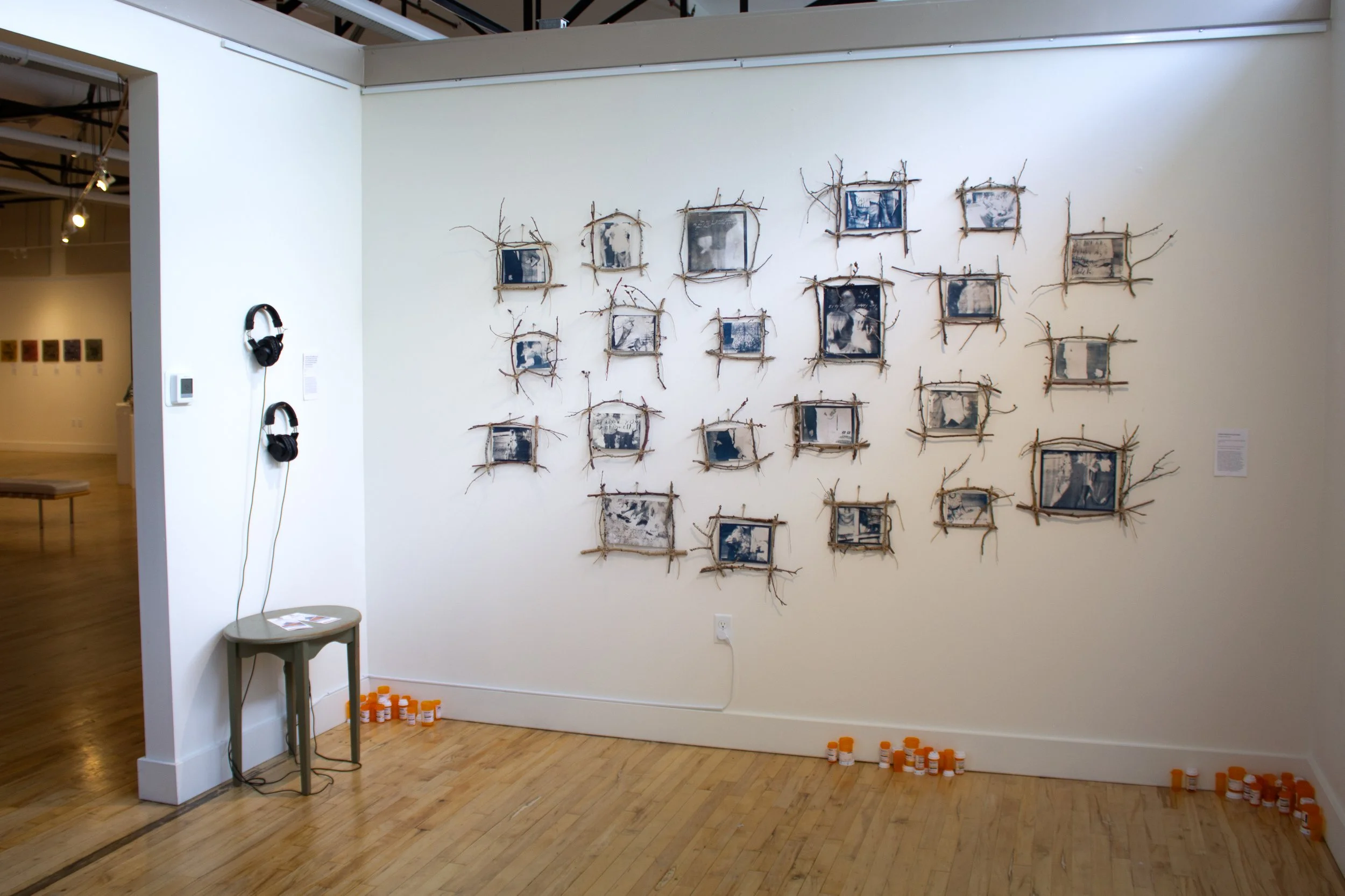
Brought to Light, 2026. Sun prints of family photos, branches from childhood garden, twine. 9'x5'.
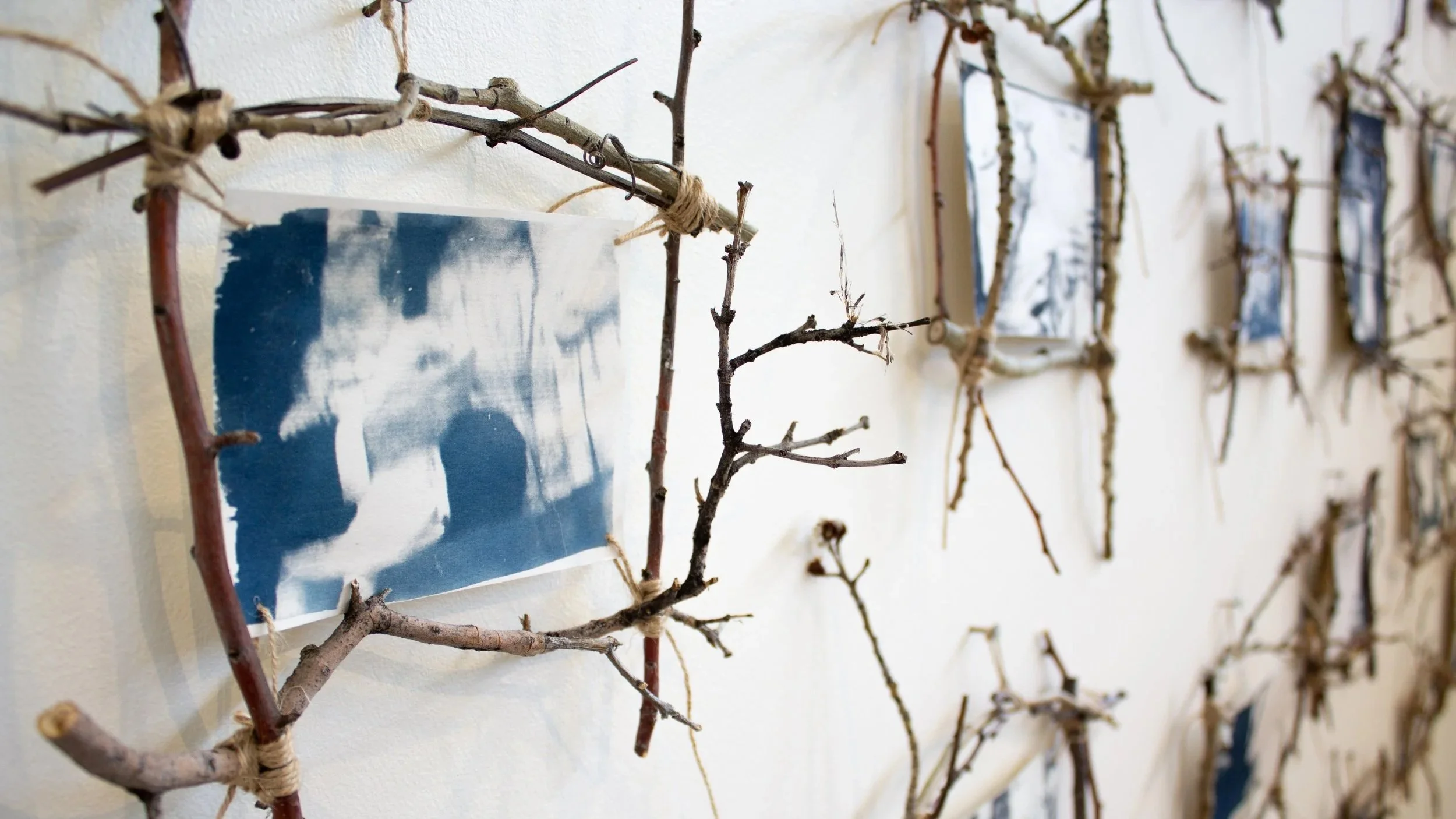
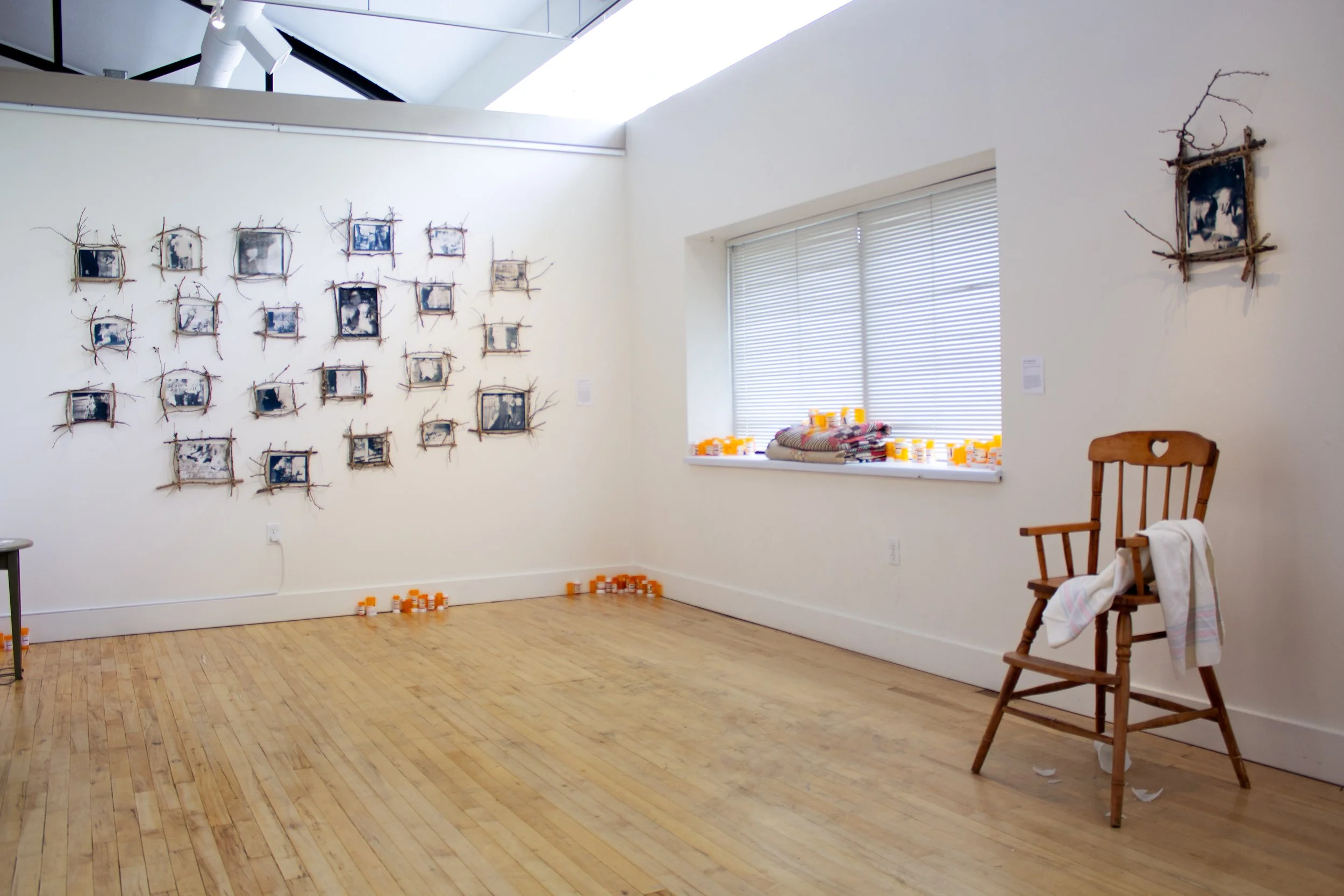
Closely cropped photographs from my mom’s childhood focus on her dad’s hands gripping my grandmother, my mother, and my aunts. These gestures carry the weight of substance misuse, domestic violence, and loss. His hands also hold cigarettes, an insidious reminder of the secondhand smoke connected to my grandmother’s lung cancer and death. Domestic abuse is often hidden, minimized, or only recognized in retrospect. By creating sun prints, I physically and symbolically bring these experiences to light. Framed with sticks from my treasured childhood garden, the work becomes a family tree of intergenerational trauma and an investigation into what his grip left behind.
I conceptualize intergenerational trauma as a desperate, ever-present hand gripping my arm. Inherited grief and the scars left by abuse can keep people entrenched in fear long after the source of harm is gone, shaping identity in ways that are difficult to see and harder to separate from. In Brought to Light, closely cropped photographs from my mom’s childhood focus on her dad’s hands gripping my grandmother, my mother, and my aunts, a gesture carrying the weight of substance misuse, domestic violence, and loss. Abuse is often hidden, minimized, or only recognized in retrospect, but by creating sun prints, I physically and symbolically bring these experiences to light. Framed with sticks from my childhood garden, the piece becomes a family tree of intergenerational trauma and an investigation into what his grip left behind. Through this process, I begin to delineate what is mine from what belongs to those who came before me.
Ev’ry Day is a Happy Day, 2026. Sound, 02:51. Original song written and recorded by Edwina Kolar (1939–1982) with Debbie (Kolar) Trujillo (1963–2023), Wendy Kolar (1965–), and Brenda (Kolar) Porter (1967–), c. 1975. Modified by Sydney Porter Williams (1996–).
While living through domestic abuse, my grandmother wrote this joyful song and recorded it with her young daughters, including my mom. In this sound work, a looped verse begins at its original tempo and gradually slows and distorts. The distortion reflects how abuse can build insidiously, making safety and freedom harder to reach. My grandmother was preparing to leave her abusive home with her daughters, but the week she hired movers, she was diagnosed with lung cancer from secondhand smoke. The slowing sound echoes her deteriorating health, the lasting impact on her daughters, and the cycle of abuse that entraps many people.
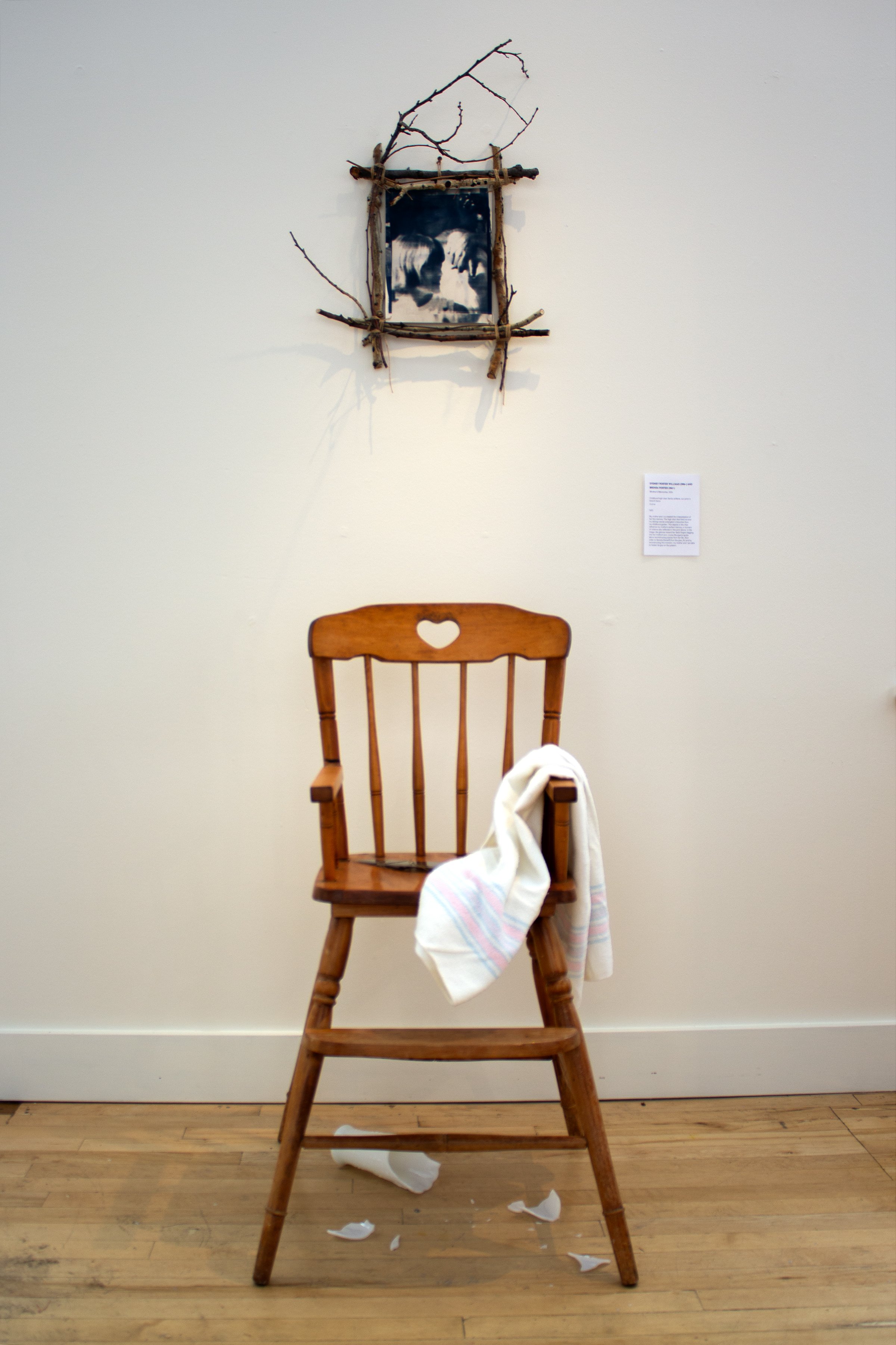
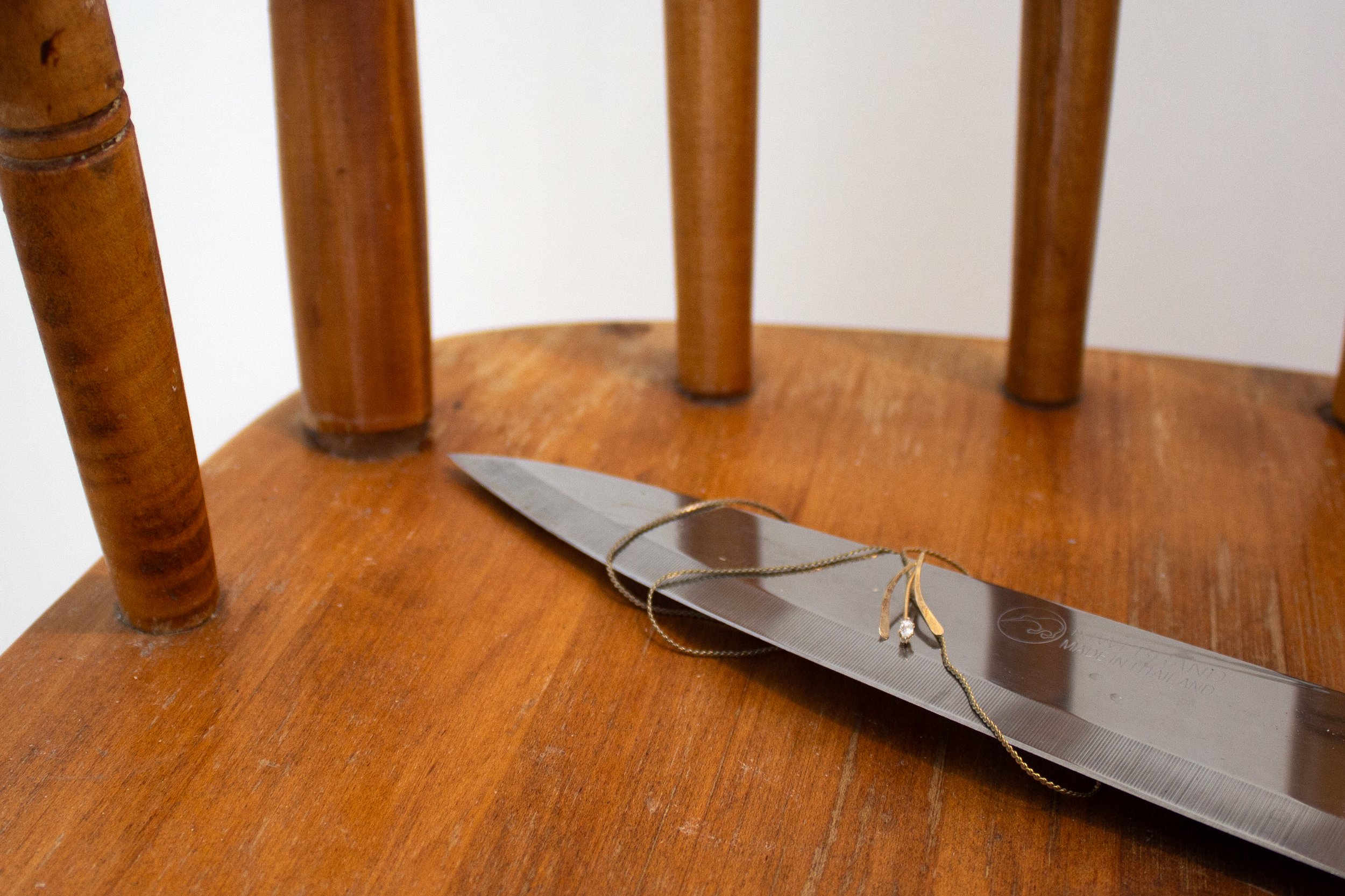
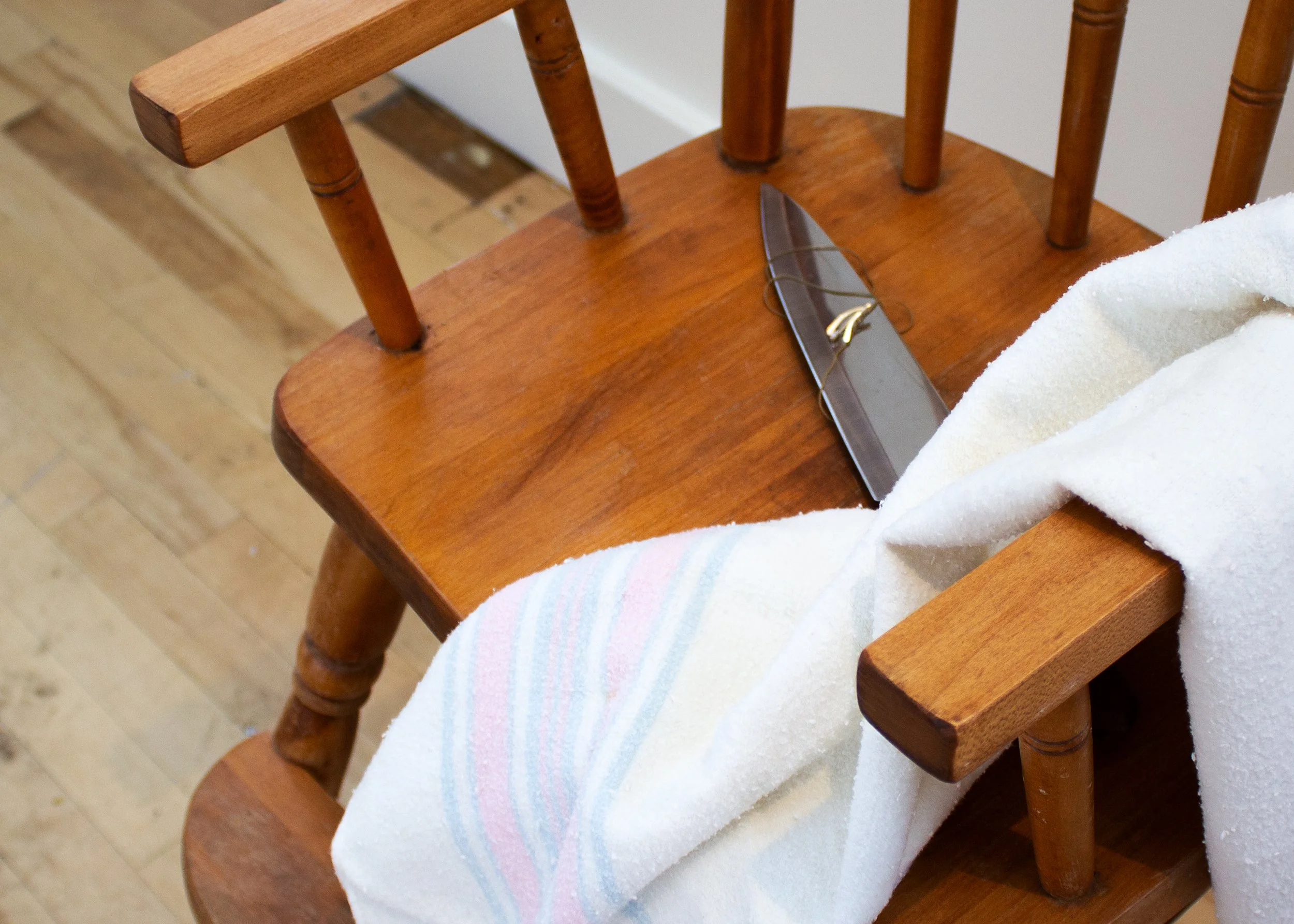
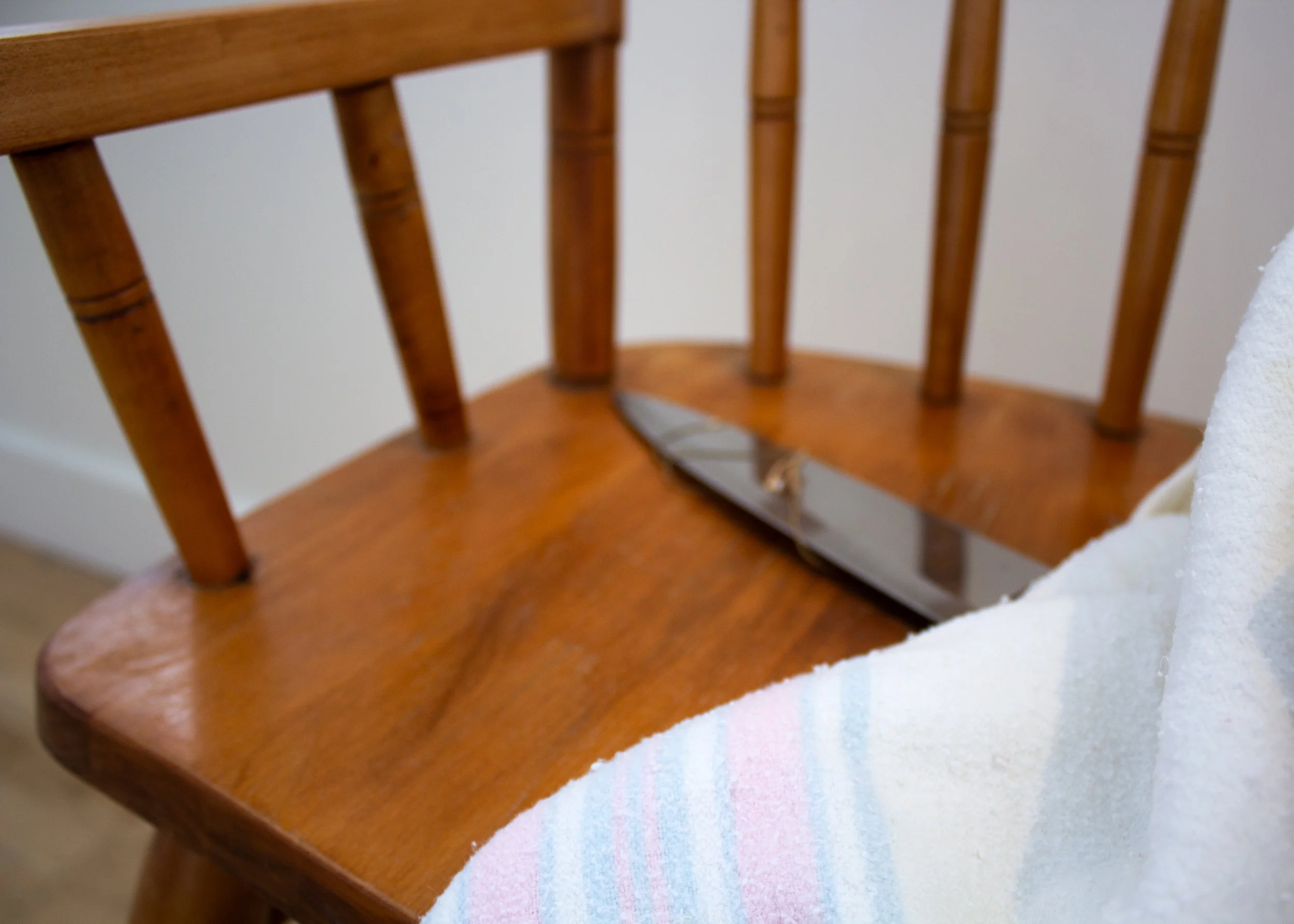
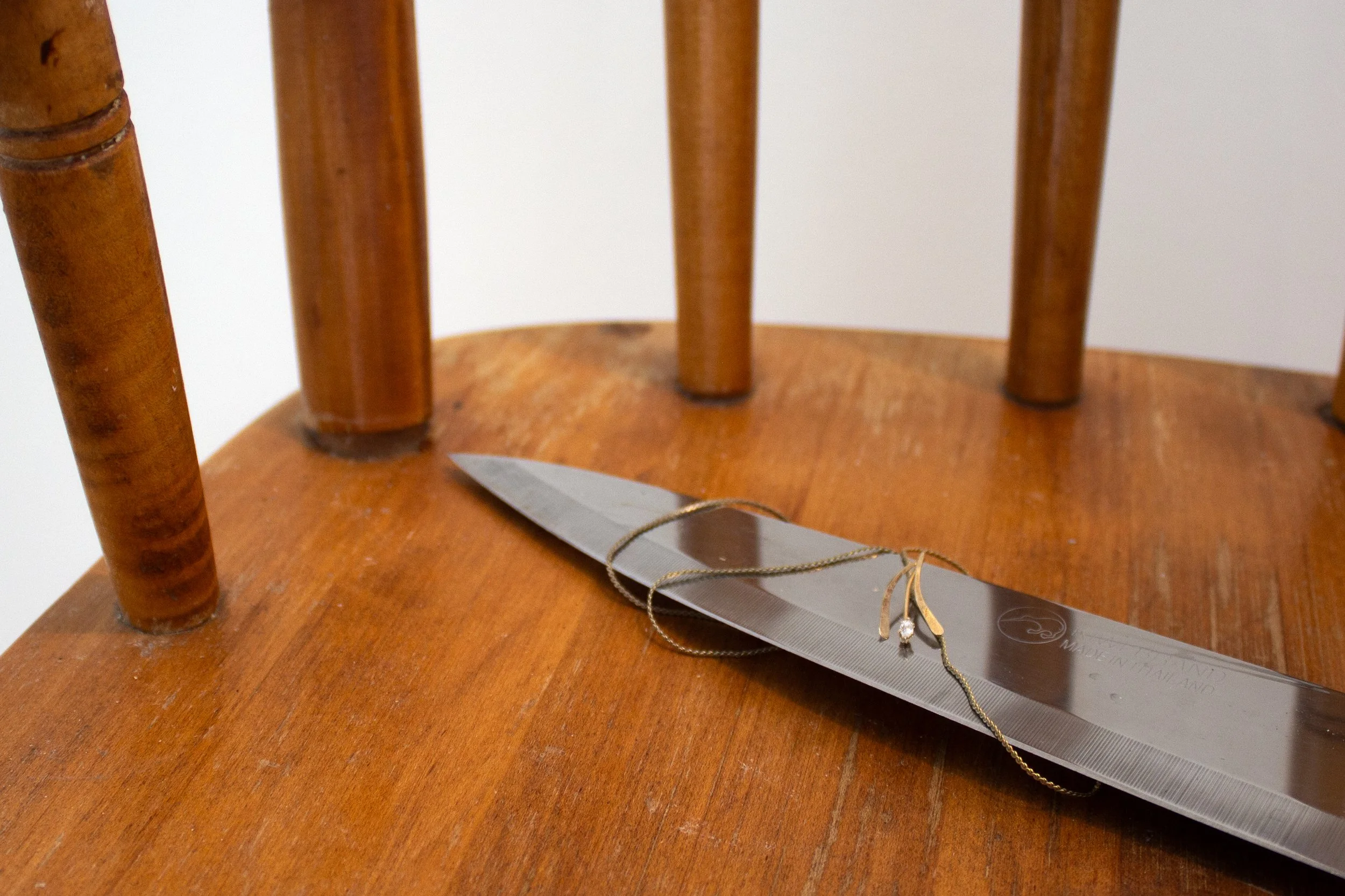
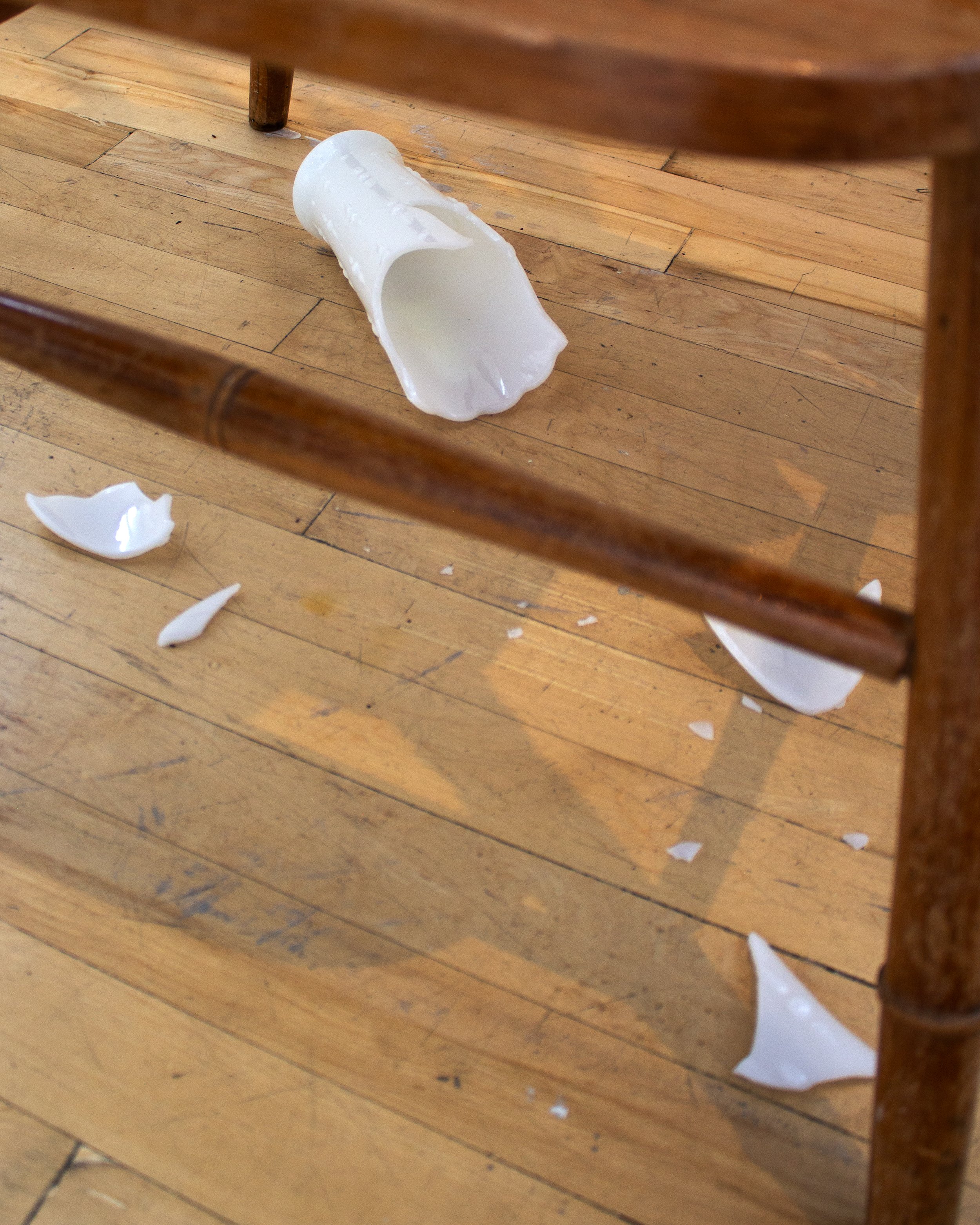
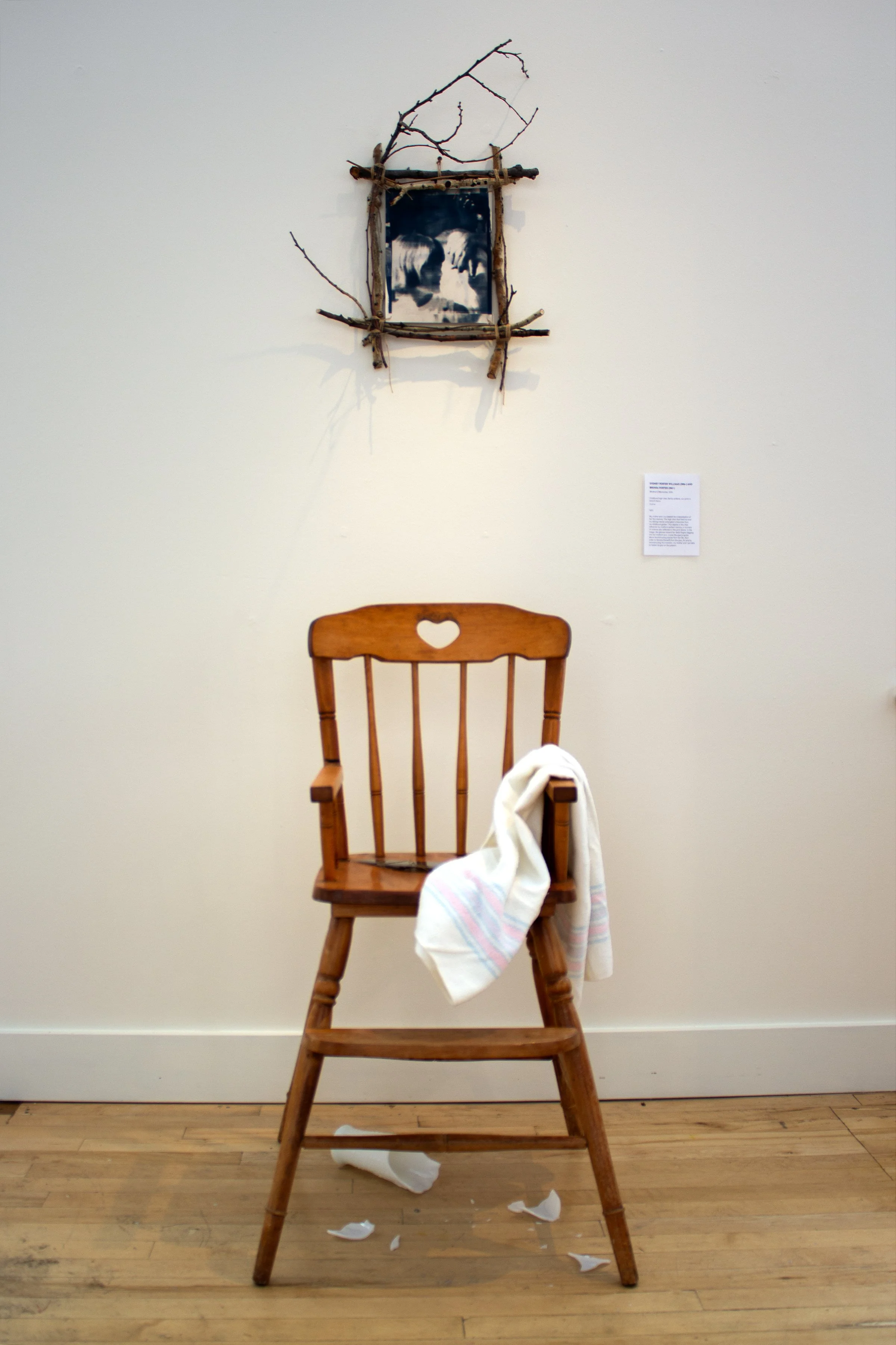
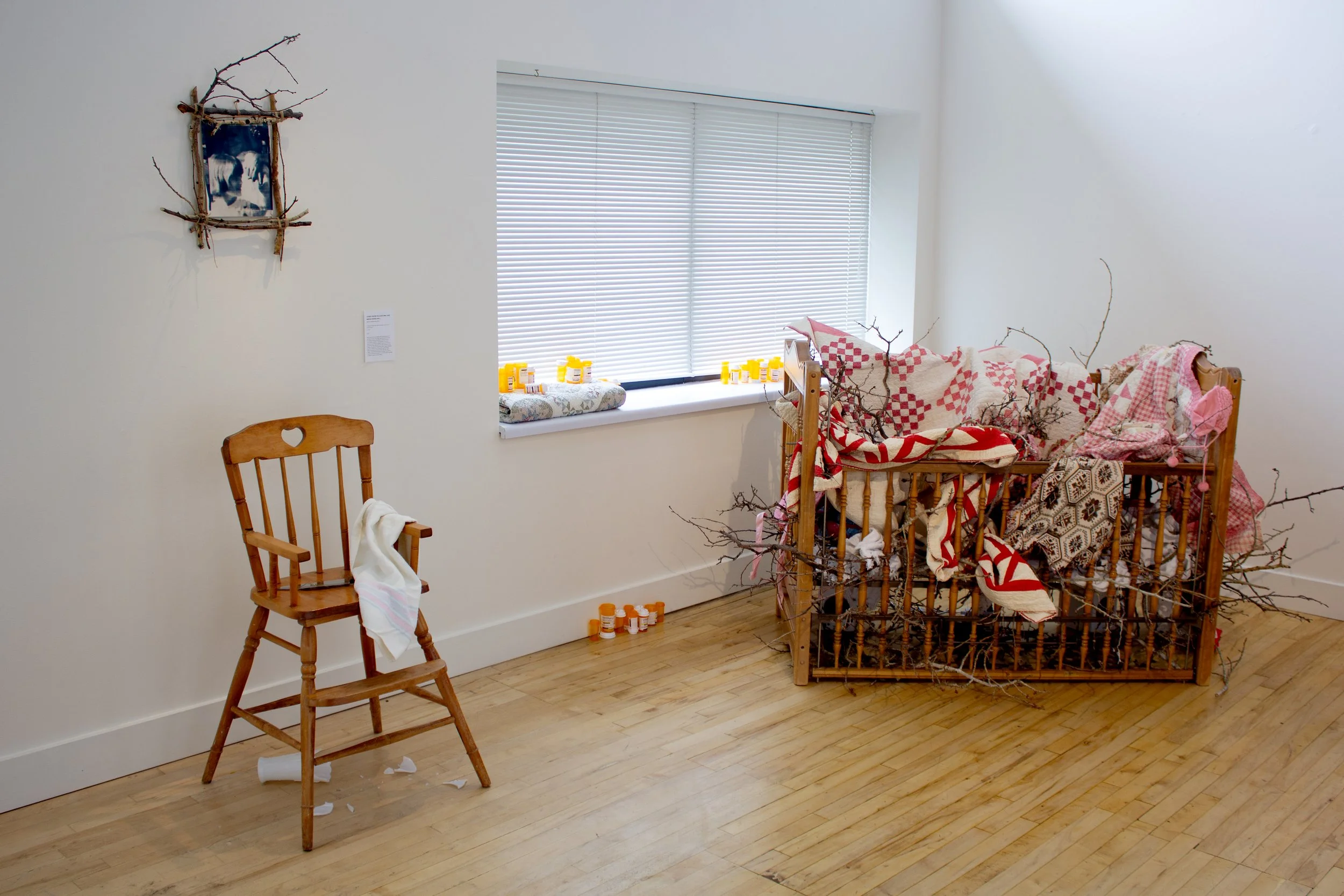
Mother’s Memories, 2026. Childhood high chair, branches, kitchen knife, necklace, sun print in branch frame.
My mother and I co-created this interpretation of her first memory. The high chair that held me and my siblings stands entangled in branches from my childhood garden. The objects in the chair reference my mother’s earliest memory, a moment of violence also reflected in the print above. In the image, she glances toward her dad’s fingers digging into her mother’s arm. Louise Bourgeois spoke about reconstructing scenes from her life “in order to liberate [herself] from the past,” and by reconstructing this moment, my mother and I are able to loosen its grip on the present.
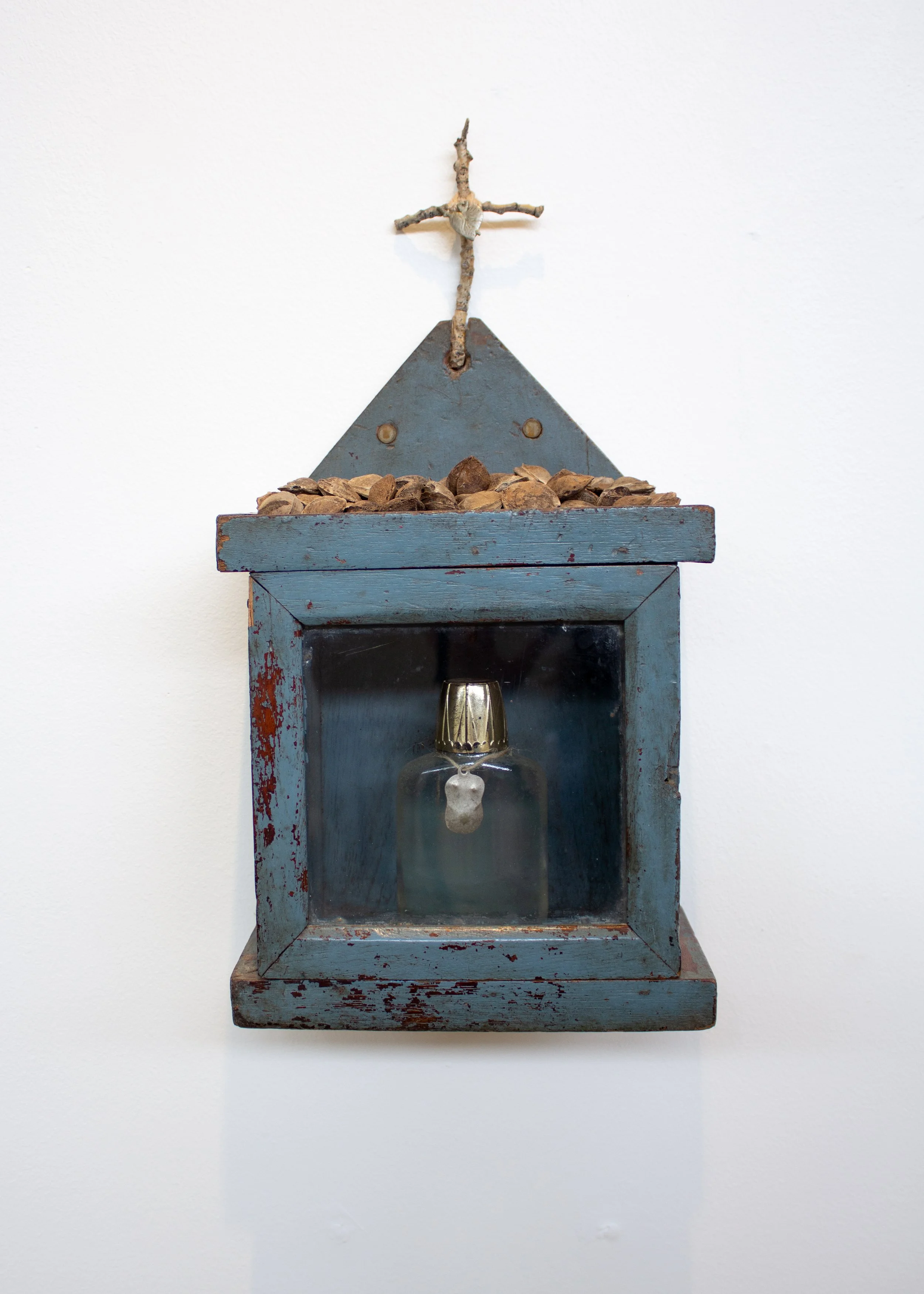
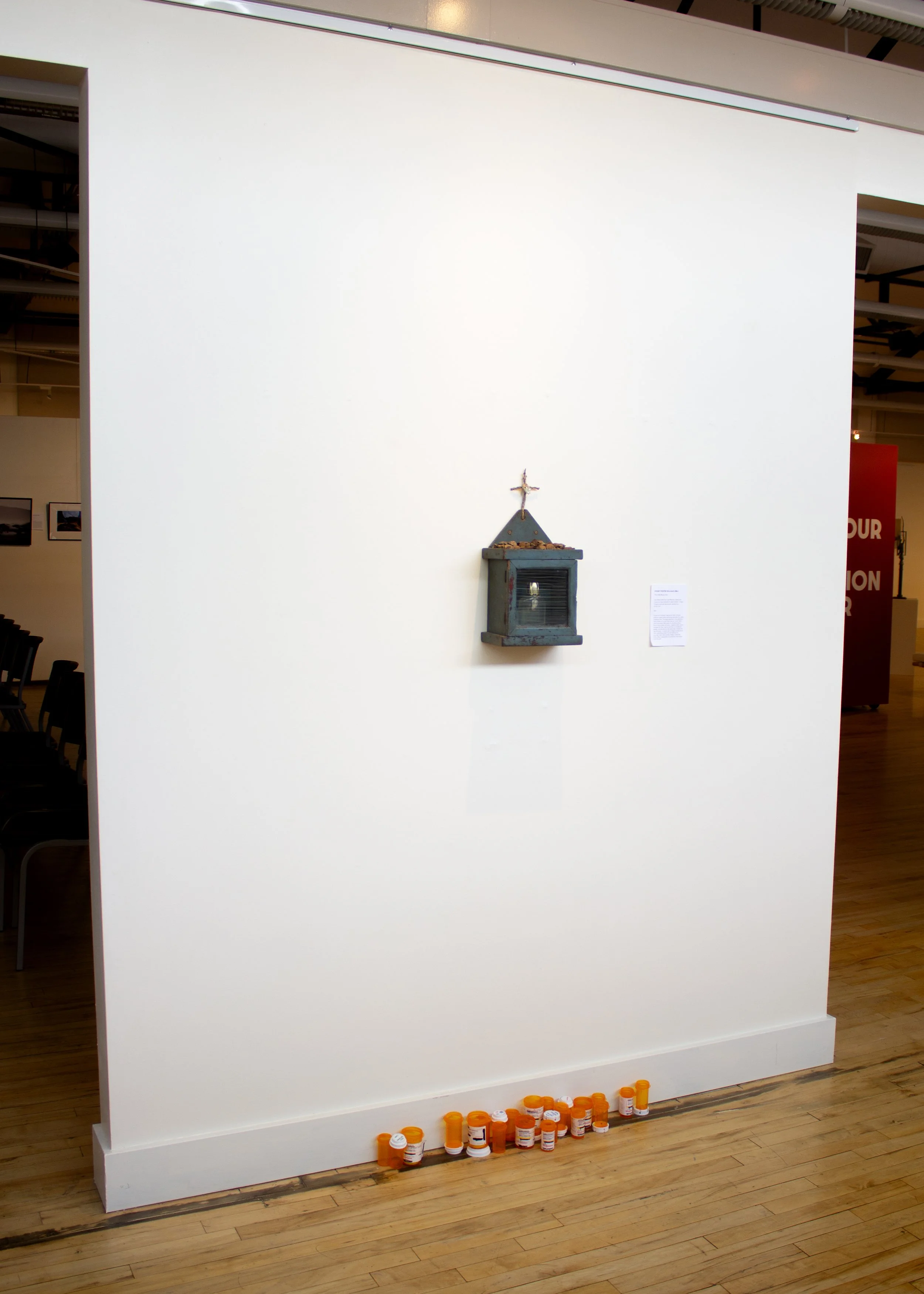
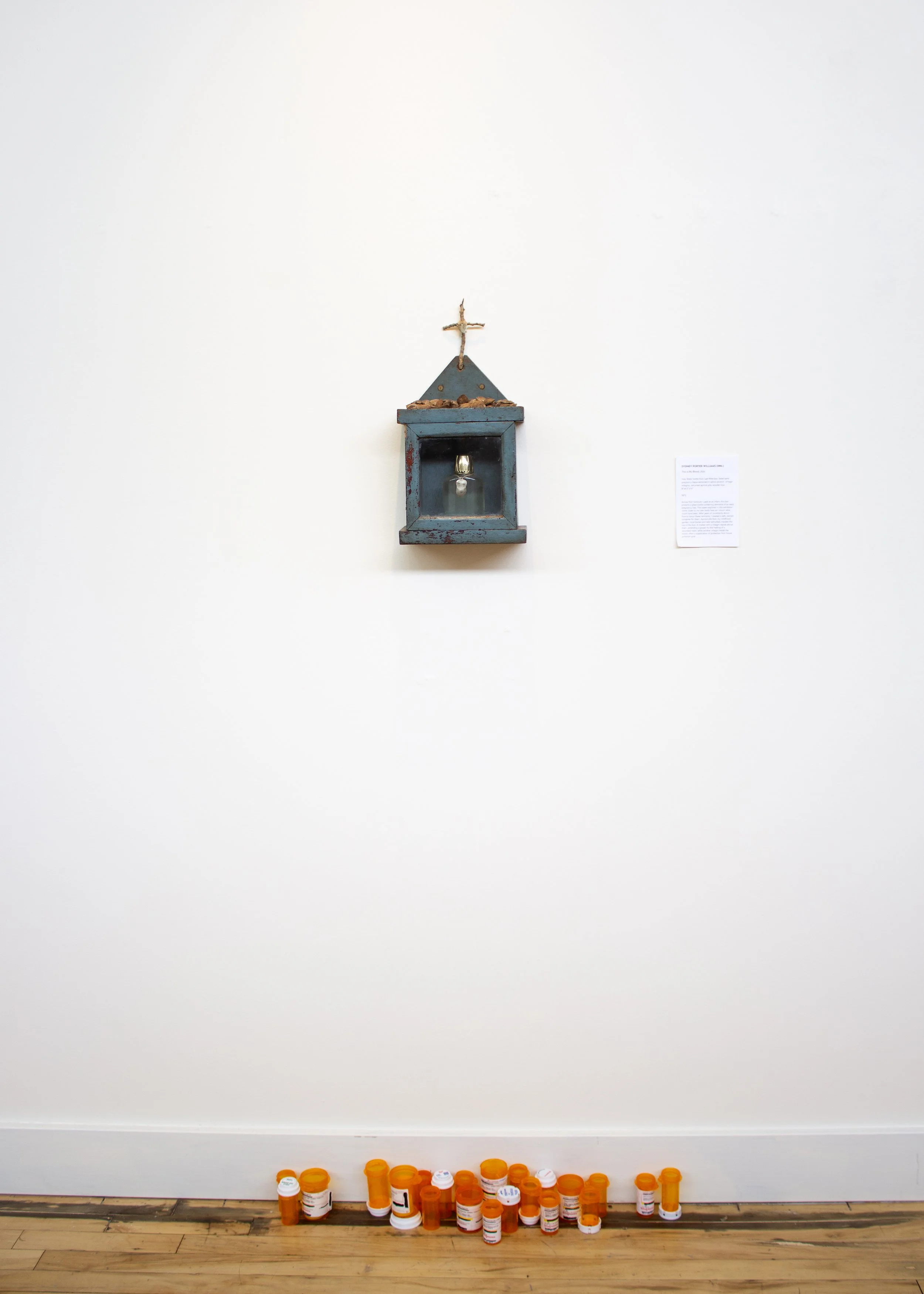
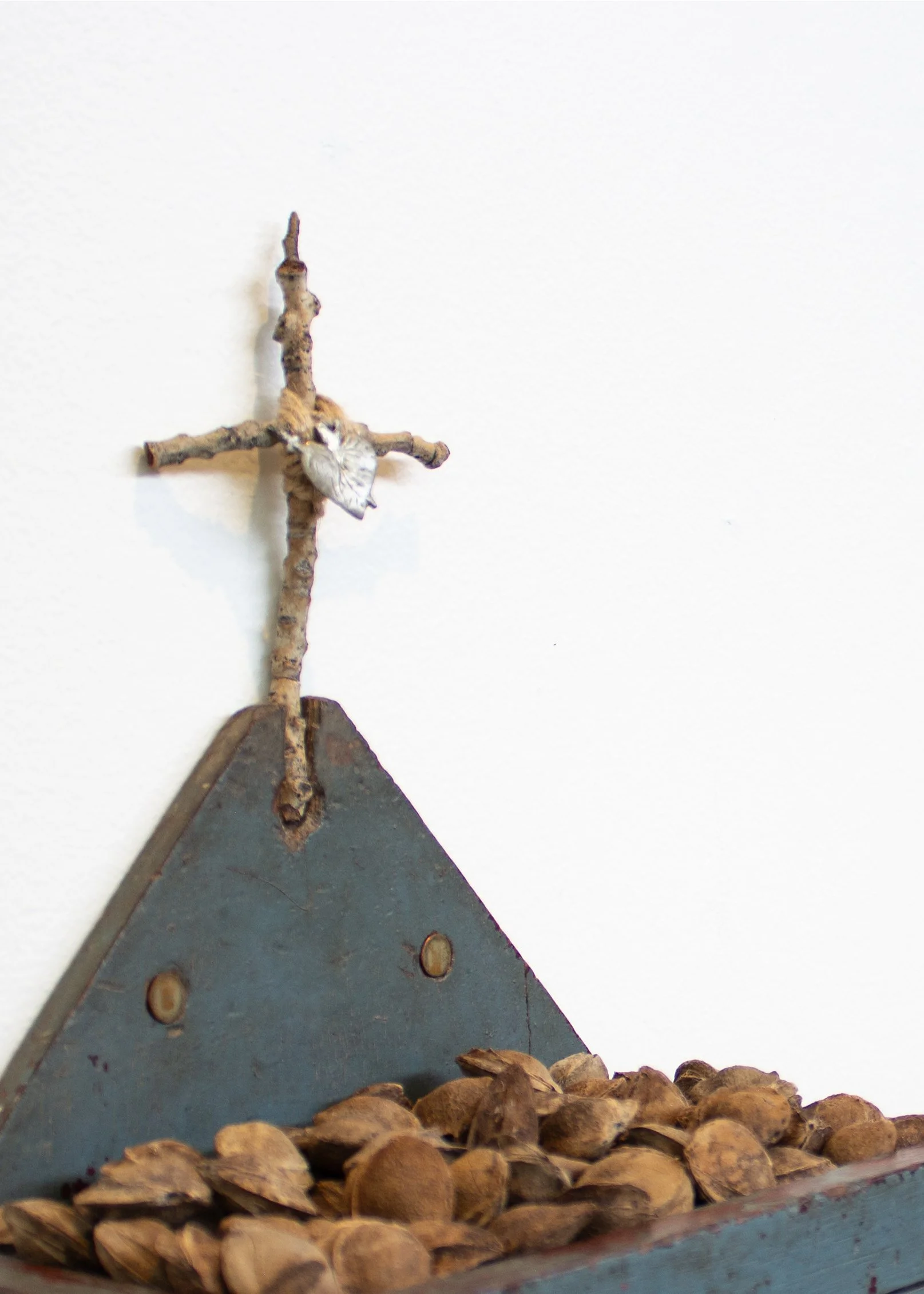
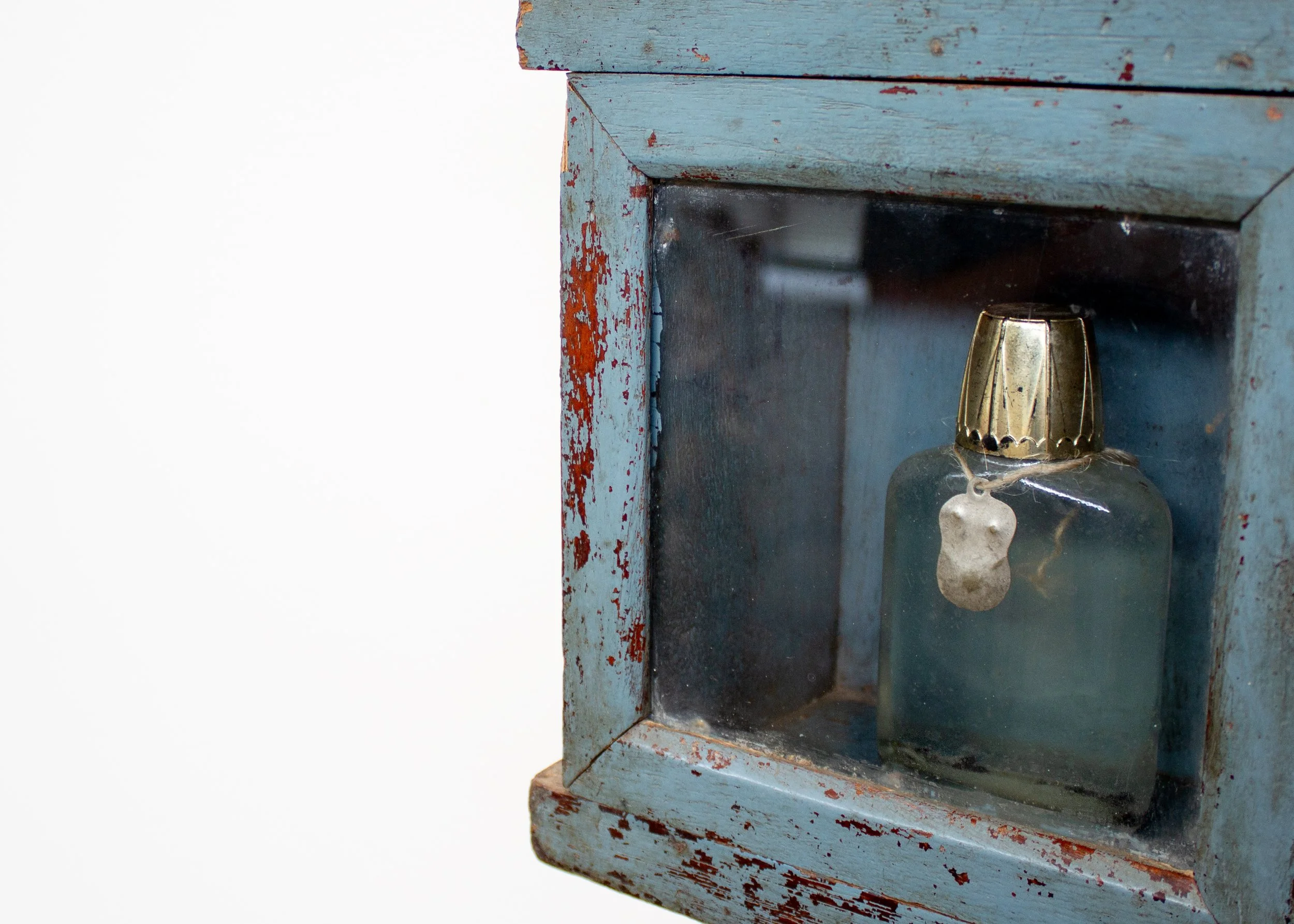
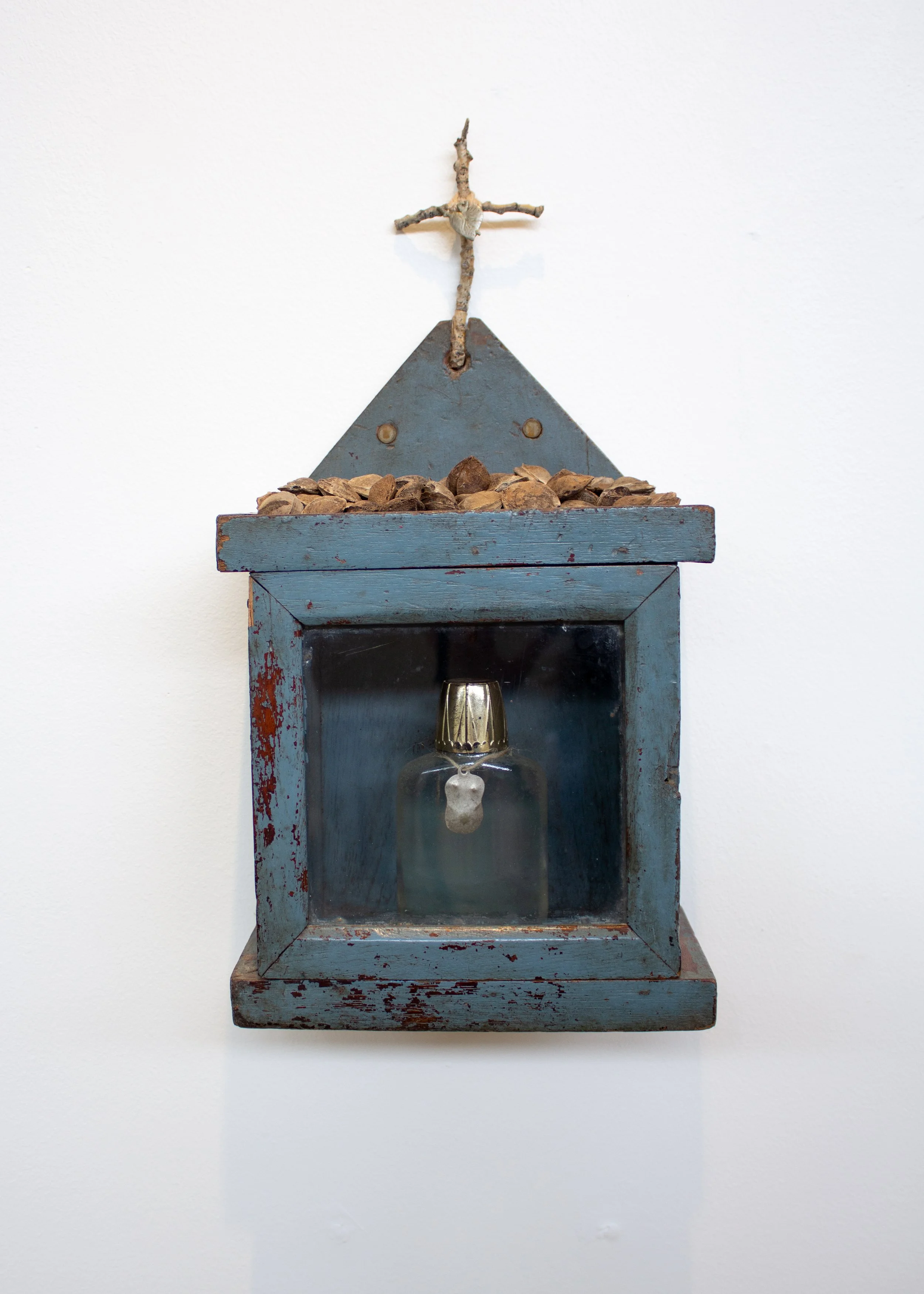
This is My Blood, 2026. Holy Water bottle from Last Rites box, failed early pregnancy tissue extracted in saline solution, vintage milagros, exhumed apricot pits, wooden box.
Across from furniture I used as an infant, this box protects a glass bottle containing remnants of an early pregnancy loss. The losses explored in this exhibition come closer to my own body here as I mourn what could have been. After years of uncertainty about how to honor these remnants, I created a safe, sacred container for them. Apricot pits from my childhood garden, once buried and later exhumed, insulate the top of the box. A marker with a milagro stands above, extending a prayer for the healing of a wounded heart, while another milagro inside the bottle offers a supplication for protection from future potential grief.
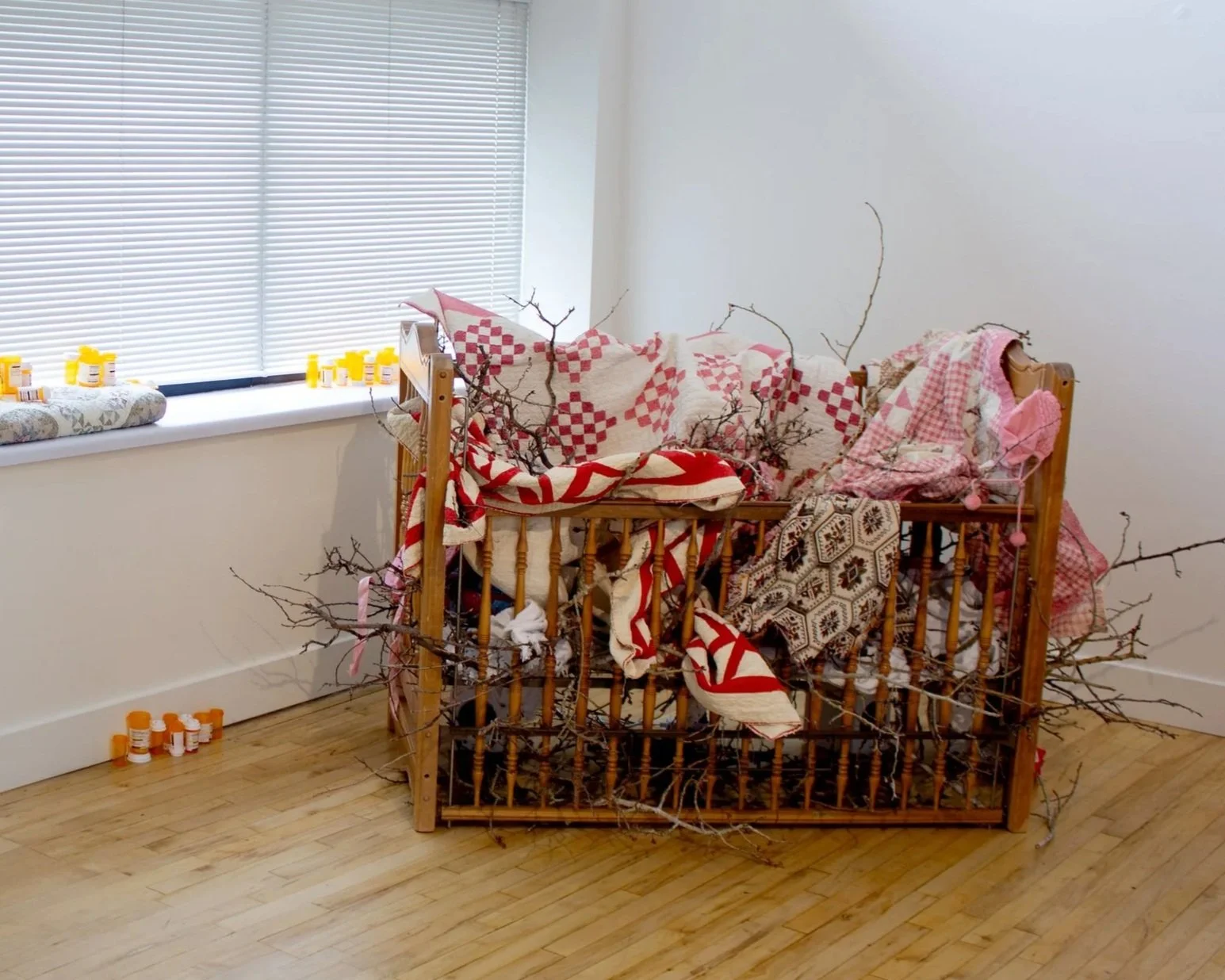
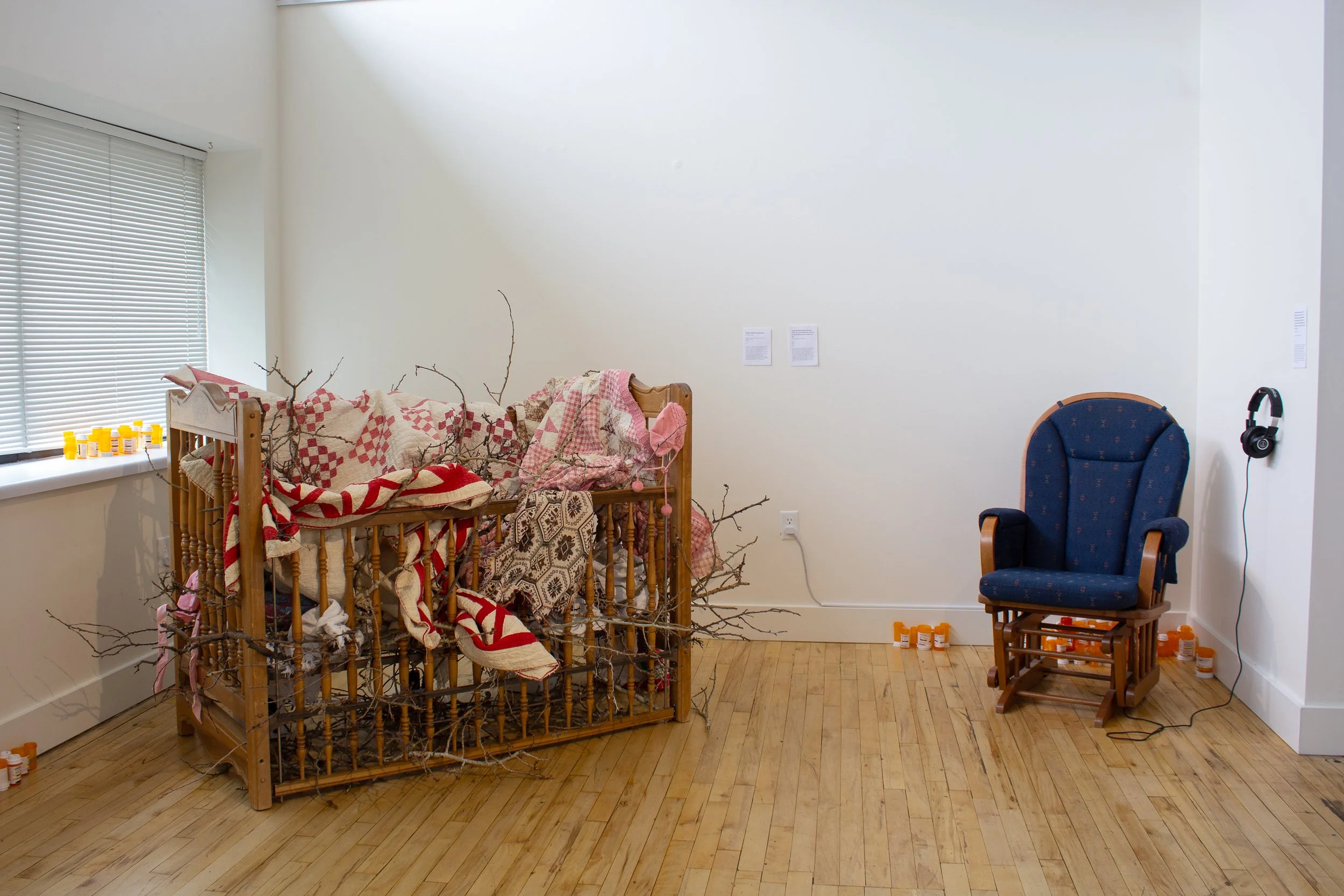
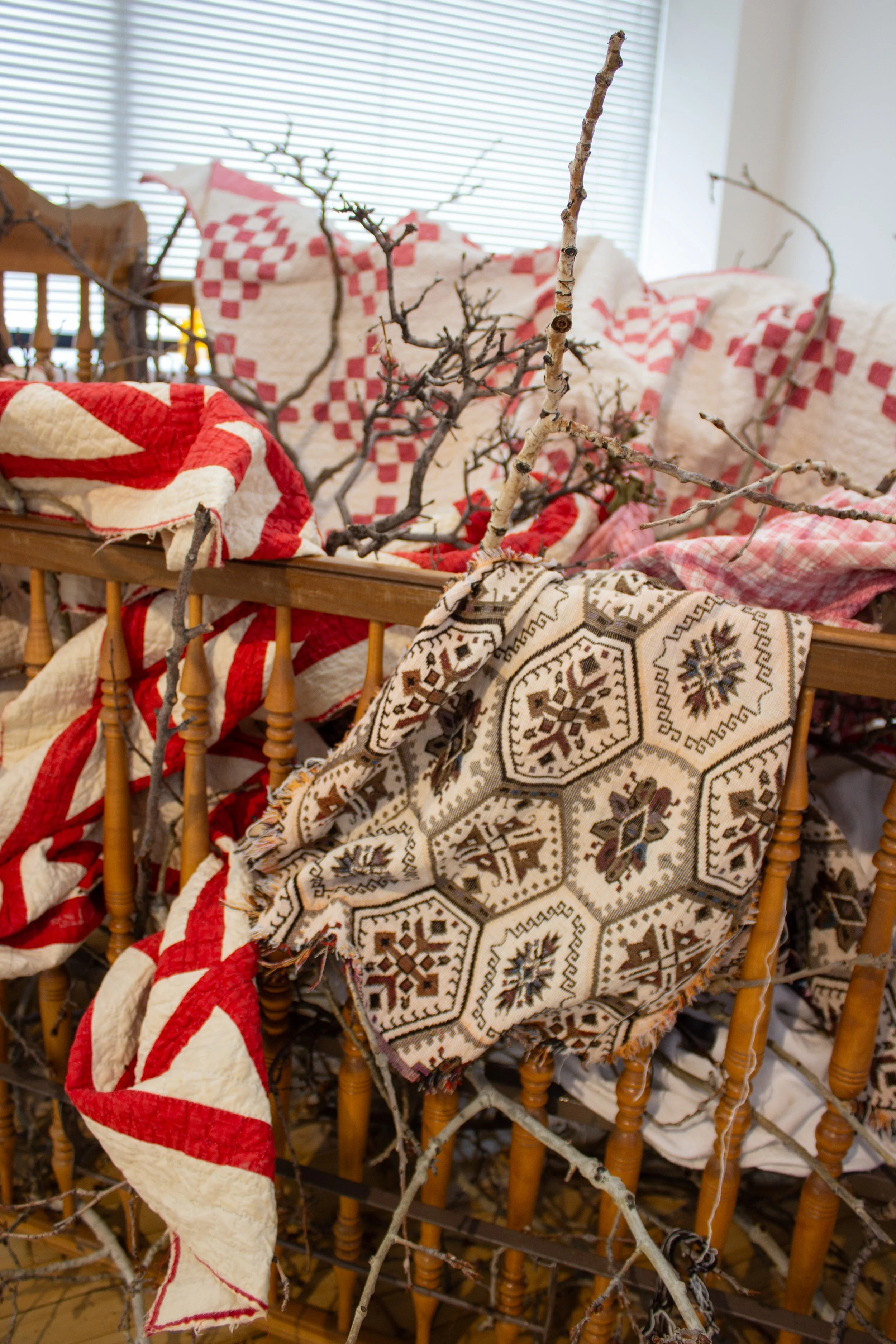
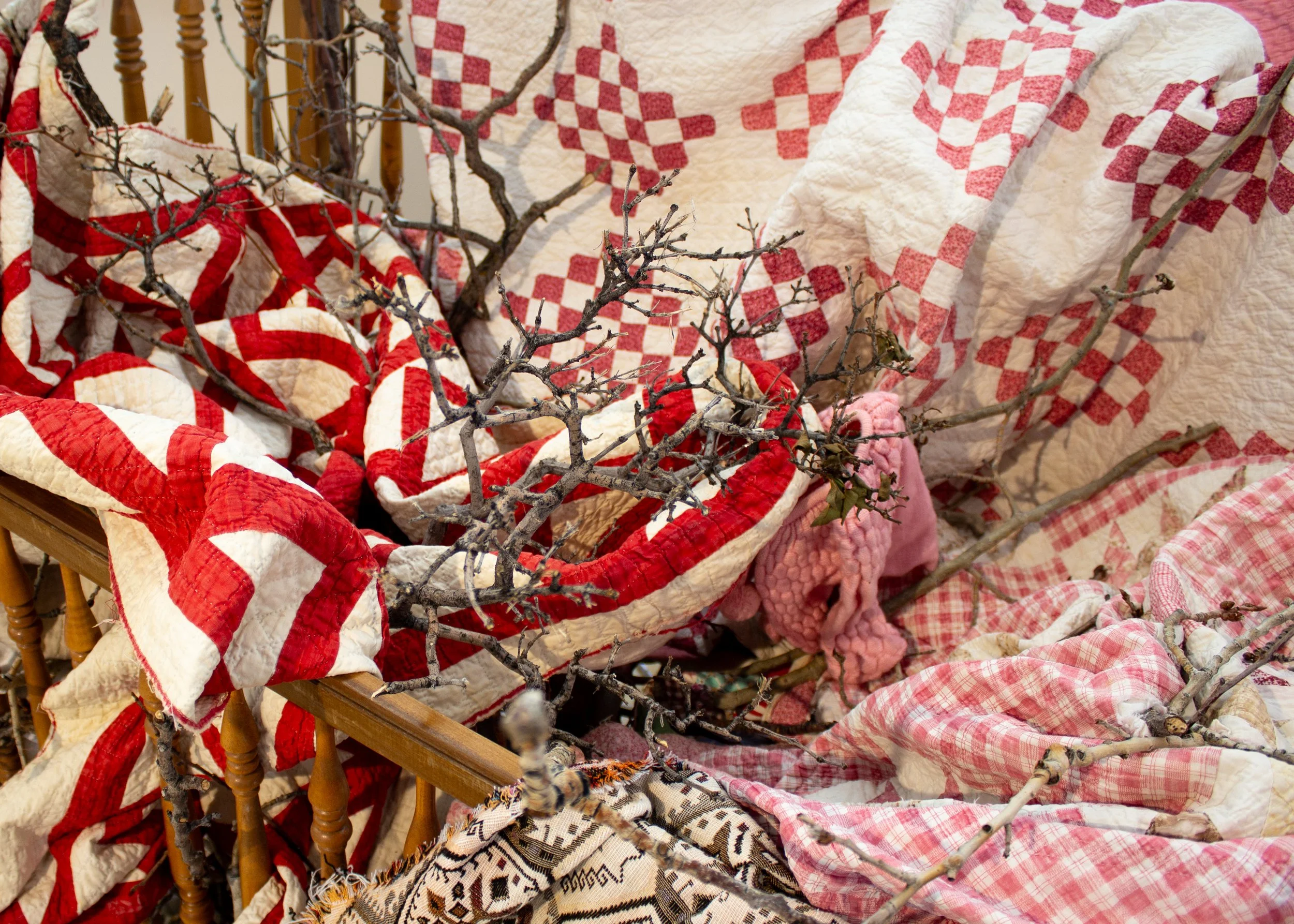
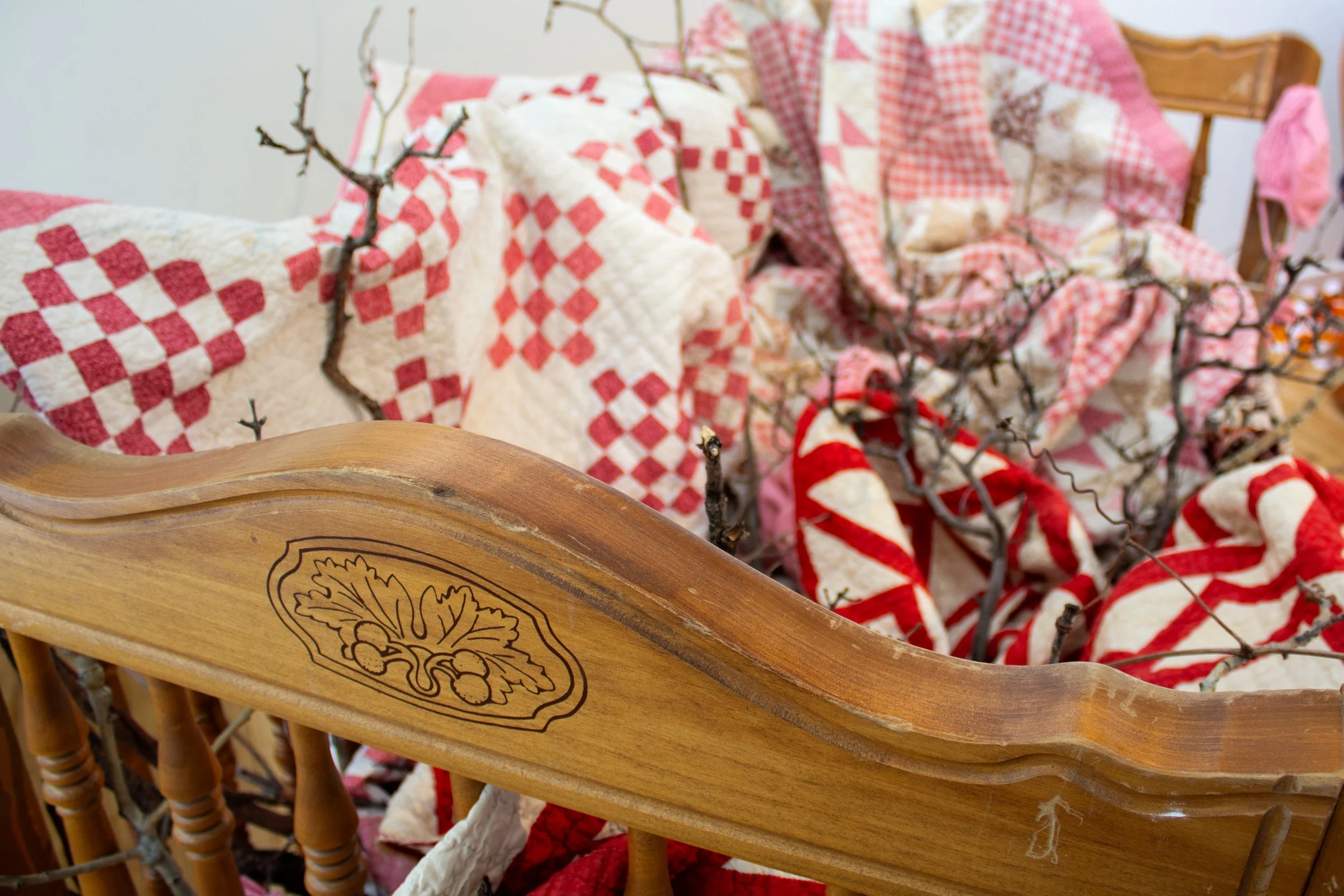
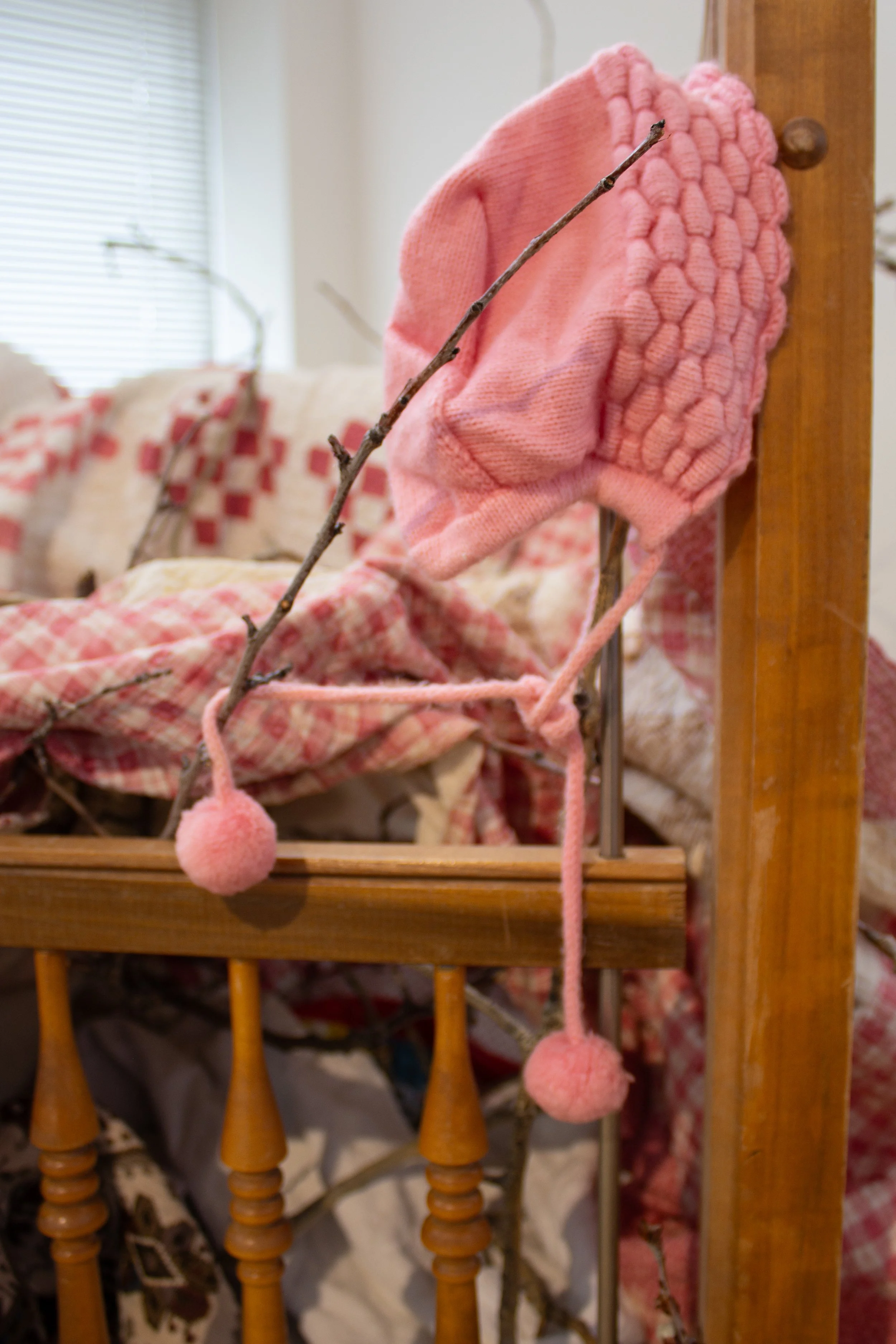
Born Into It, 2026. Childhood crib, family textiles, branches from childhood garden
The crib that cradled me and my siblings now holds blankets and textiles preserved by generations of my family, entangled in branches from my childhood garden. Research on childhood trauma shows that patterns of attachment can shape development from the earliest years, and I use the crib as a symbol of this early attachment trauma and identity formation. The textiles reference a repeated pattern of intergenerational trauma on both sides of my family. This trauma roots itself in the body, and it is difficult to disentangle oneself from this inheritance.
Great Grandma’s Lullaby, 1976. Sound, 02:08. Marie Deakin (1921–2005). Original song, My Little Buckaroo, written by Jack Scholl and M.K. Jerome in 1937.
My great grandmother recorded a series of lullabies at the request of her children and grandchildren, and this song remains especially beloved in my family. Many family members remember her singing it to a group of grandchildren shortly before she died. In this installation, the lullaby offers comfort to those on both sides of my family who absorbed intergenerational trauma as children or experienced childhood trauma directly. It creates a soothing presence within a space that holds pain, loss, and love.
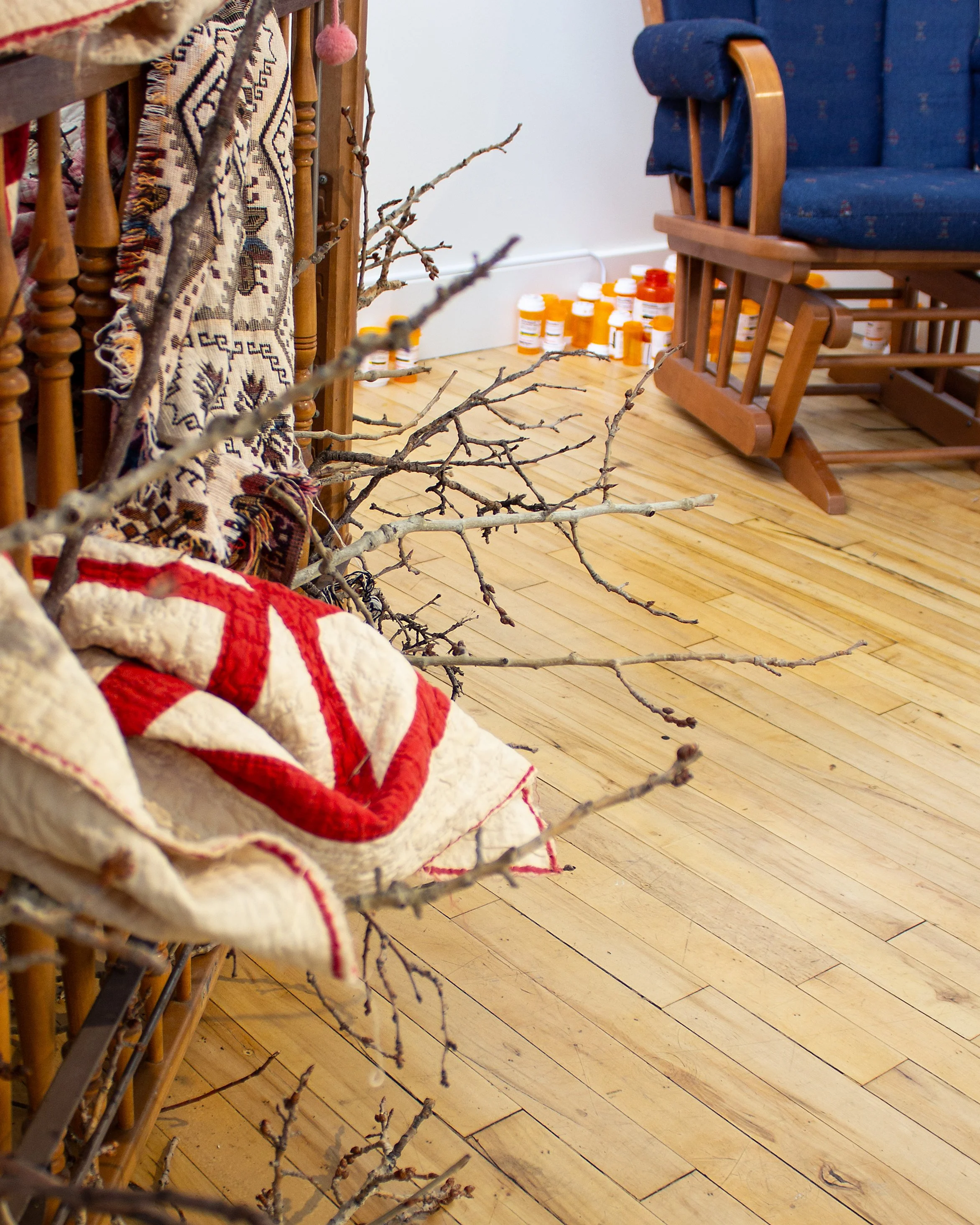
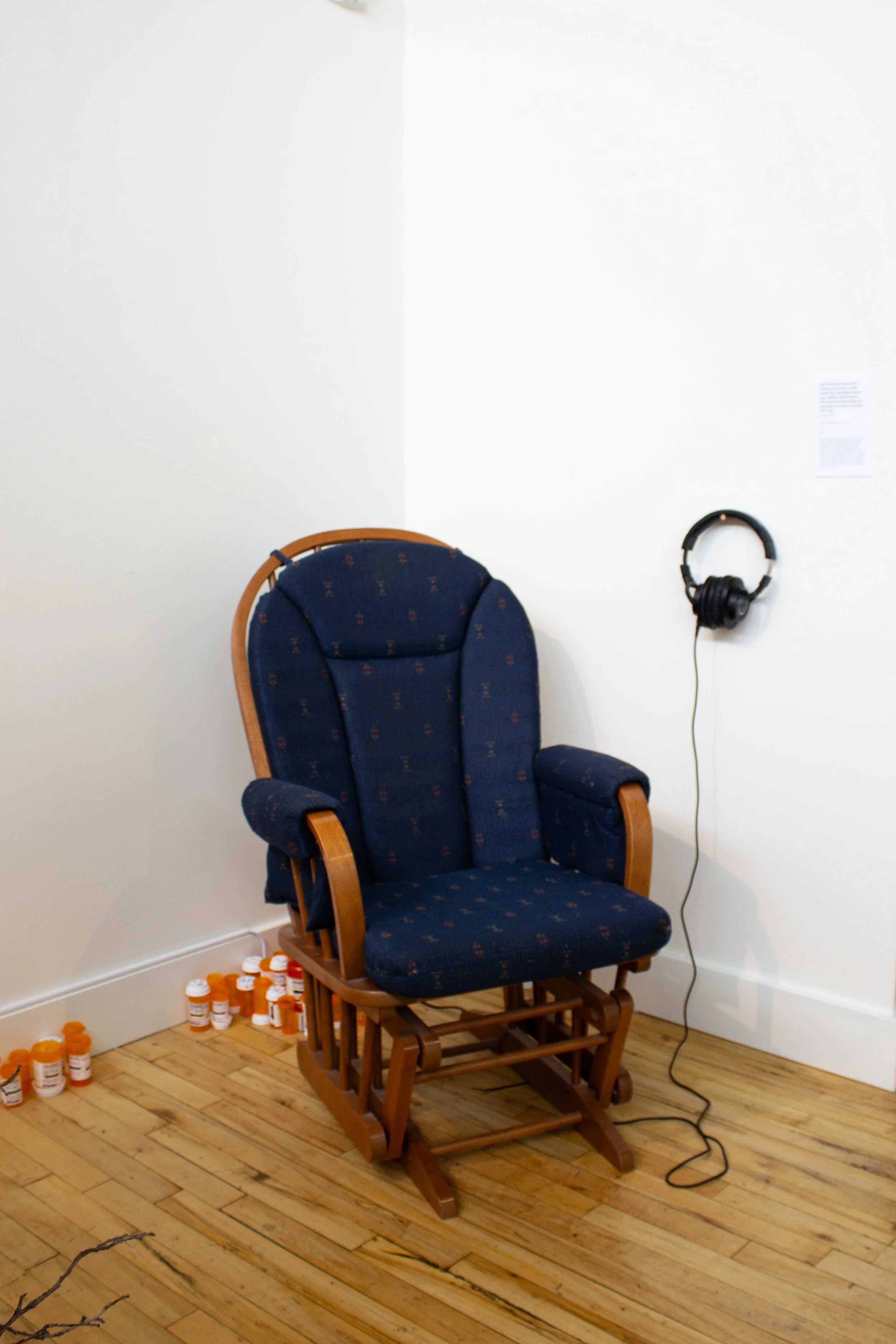
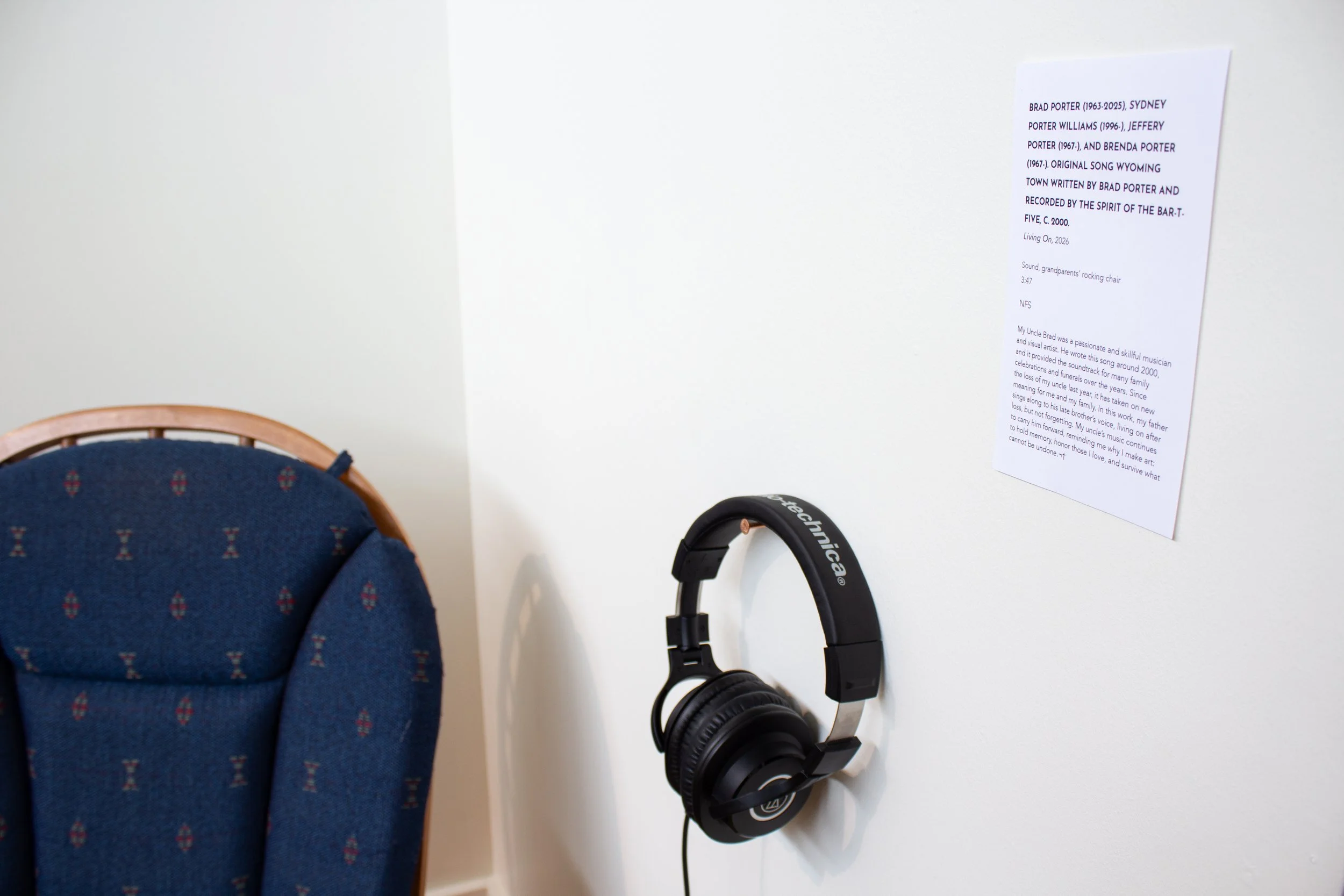
Living On, 2026. 03:47. Sound, grandparents' rocking chair
My Uncle Brad was a passionate and skillful musician and visual artist. He wrote this song around 2000, and it provided the soundtrack for many family celebrations and funerals over the years. Since the loss of my uncle last year, it has taken on new meaning for me and my family. In this work, my father sings along to his late brother’s voice, living on after loss, but not forgetting. My uncle’s music continues to carry him forward, reminding me why I make art: to hold memory, honor those I love, and survive what cannot be undone.